
Managing oil spills is a critical task that requires precision, speed, and reliability. For decades, traditional methods have been the backbone of oil spill detection and response. However, with technological advancements, modern oil spill detectors are gaining traction as a more effective solution. But how do these methods compare? Let’s dive deeper to explore their effectiveness, advantages, and challenges.
1, Traditional Methods of Oil Spill Detection
Traditional methods, such as visual inspections, manual sampling, and aerial surveillance, have been widely used for decades. Here’s a closer look at their features:
Visual Inspections
-Inspectors manually observe water bodies or industrial areas.
-While cost-effective, this method heavily relies on human skill and may miss spills in low-visibility conditions.
Manual Sampling
-Involves collecting water samples for laboratory analysis.
-Provides accurate results but is time-consuming and unsuitable for large-scale or immediate response.
Aerial Surveillance
-Aircraft or drones monitor vast areas for visible oil slicks.
-Effective for large spills but less reliable for detecting smaller leaks or underwater spills.
Challenges:
-High reliance on human accuracy.
-Delays in detection, especially for small or hidden spills.
-Limited scalability for continuous monitoring.
2, Modern Oil Spill Detectors
Oil spill detectors leverage advanced technologies such as infrared sensors, sonar systems, and satellite imagery. Here’s how they work:
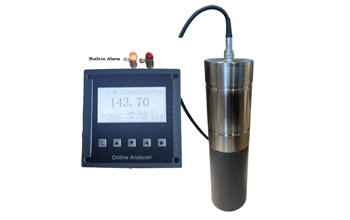
UV Fluorescence Non-contact Oil Spill Detector
Detecting oil on water in real-time.
It can detect a 1 μm thick layer of oil on the water’s surface at a distance of 0.5-10 meters above it.

Infrared Sensors
Detect temperature variations caused by oil spills on water surfaces.
Highly effective for real-time monitoring, especially in challenging weather conditions.
Sonar Systems
Identify underwater spills using sound waves.
Ideal for deep-sea operations and pipeline monitoring.
Satellite Imagery
Provides a comprehensive overview of large-scale spills.
Can monitor remote areas that are inaccessible by traditional methods.
Advantages:
-Greater accuracy and real-time detection.
-Reduced dependence on human intervention.
-Scalable solutions for continuous and large-area monitoring.
3, Effectiveness: Head-to-Head Comparison
[table “58” not found /]4, Why Oil Spill Detectors Are the Future
While traditional methods have served their purpose, modern oil spill detectors are paving the way for more efficient and proactive environmental management. Their ability to provide real-time data, reduce human error, and scale operations makes them a superior choice for industries and governments alike.
Conclusion
The debate between oil spill detectors and traditional methods concerns effectiveness and long-term sustainability. While useful in specific scenarios, traditional methods are increasingly being outpaced by the precision and reliability of modern detectors. As technology continues to evolve, adopting advanced oil spill detectors is not just an option—it’s a necessity for safeguarding our environment.
5, Call-to-Action:
Ready to upgrade your oil spill detection strategy? Discover the latest in oil spill detection technology and make your operations more efficient today!
UV Fluorescence Non-contact Oil Spill Detection Sensor
Tags: Oil Spill Detectors, oil spill detection, Detecting oil on water, oil spill detection technology, Non-contact Oil Spill Detector, Suppliers, manufacturers, factory, wholesale, buy, price, quotation, bulk, for sale, companies, stock, cost.
Related Blogs:
Oil Leaks or Spills Detecting Methods and Sensors
Three types of oil sensors: Oil in Water Sensor, PAH Sensor, and Oil Spill Detector Sensor
To send An Enquiry Now: