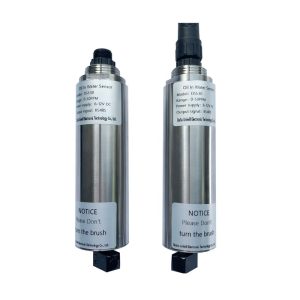


Non-Contact Oil Spill Detector Overview
The OPS UV Fluorescence Non-contact DSOD703 Oil Spill Detector is a non-contact sensor designed for real-time detection of oil on water. It uses oil’s natural fluorescence to detect oil and alerts you to unsuspected oil spills immediately. It provides 24/7 industrial and environmental water monitoring at effluent discharge or influent intake points.
DSOD703 Oil Spill Detector Monitorable Oils
Automotive motor oil, turbine oil, fuel oil, marine diesel, crude oil, civilian fuel oil, lubricants, mineral oils(non-synthetic), and so on.

DSOD703 Oil Spill Detector Measuring Principle – UV Fluorescence Technology
The OPS DSOD703 Oil Spill Detection and Monitoring Sensor System can detect a 1 μm-thick oil layer on the water’s surface at distances of 0-10 meters above it.
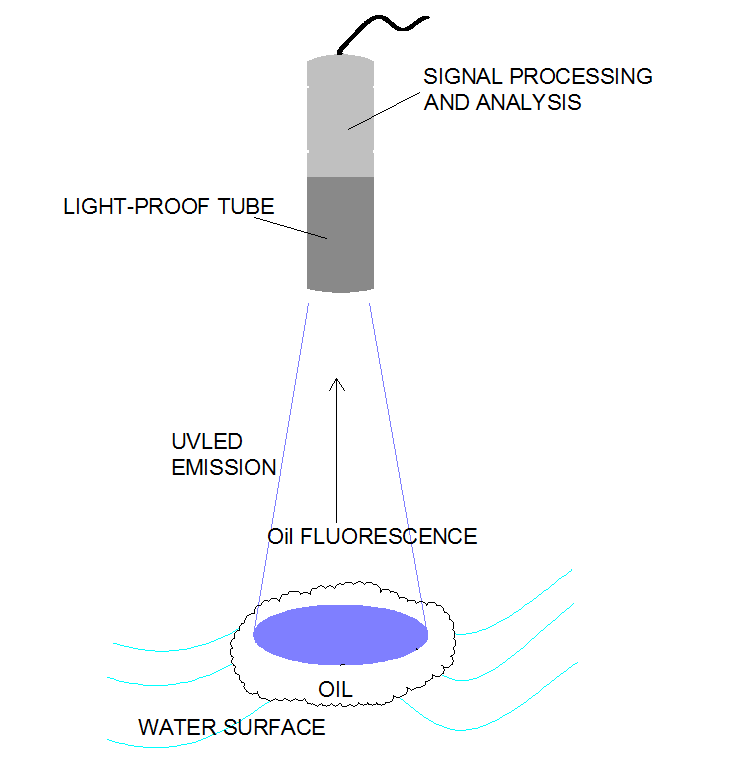
The Oil Spill Detection Sensor emits UV pulses onto the water surface or the ground, stimulating oil molecules in the target area to fluoresce. Utilizing the inherent fluorescent properties of these oil molecules, it identifies their chemical composition and sends an early warning signal to the operator.
DSOD703 Oil Spill Detector Installation Cases
You can see the value of oil spill detectors in real-world settings. The table below highlights successful applications in different countries:
| Location | Facility Type | Use Case Description | Solution Description |
|---|---|---|---|
| Russia | Sewage Channels | Oil spills lead to environmental pollution. | Continuous monitoring with the DSOD703 oil spill detection system alerts operators in real time. |
| Hainan, China | Oil Depot | Oil spills may damage the marine environment. | The OPS DSOD703 oil spill detection system provides real-time alerts. |
| Abu Dhabi, UAE | Desalination Plant | Oil spills pose a threat to water intake. | Five DSOD703 oil spill detectors deliver continuous monitoring. |
| Fujian, China | River Monitoring | Oil spills cause river pollution. | The DSOD703 oil spill detection system provides real-time alerts. |
| Poland | Lake Monitoring | Oil spills result in lake pollution. | Four DSOD703 oil on water detectors ensure continuous monitoring. |
| Turkey | Steel Plant | Wastewater discharge leads to river pollution. | Two DSOD703 oil Oil film detectors enable timely diversion of contaminated water. |
| Vietnam | Diesel Storage Tank | Oil spills cause environmental pollution. | Nine DSOD703 oil spill Sensors provide continuous monitoring. |
Case Study 1: Installation in Sewage Channels, Russia
In an industrial wastewater system in Russia, the OPS DSOD703 oil spill detector was deployed above sewage channels to address long-standing risks of hydrocarbon contamination. This project demonstrates that the DSOD703 is not limited to open-water environments—it is equally effective in wastewater channels, drainage conduits, and industrial effluent pathways. This Russian deployment significantly enhanced operational visibility for wastewater treatment personnel, enabling them to manage pollution risks more effectively and maintain environmental compliance. ( Read more info: https://opticaldosensor.com/desun-uniwill-dsod703-oil-spill-detector-installed-in-sewage-channels-in-russia/ )

Case Study 2: Coastal Oil Depot in Hainan
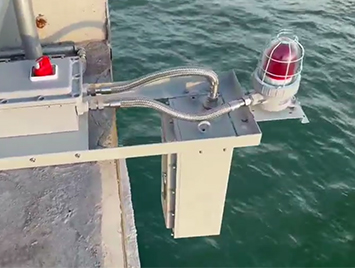
A major coastal oil storage facility in Hainan implemented the DSOD703 to strengthen its environmental safety measures. Positioned above the water near loading zones, the system provides continuous real-time monitoring. Operators now receive instant alerts at the earliest signs of oil leakage, enabling containment before the spill spreads. The depot reports a significant improvement in operational environmental compliance and risk reduction. ( Read more info: https://opticaldosensor.com/desun-uniwill-dsod703-non-contact-oil-spill-detector-installed-at-coastal-oil-depot-in-hainan/ )
Case Study 3: Underground Diesel Storage Tank Leak Monitoring

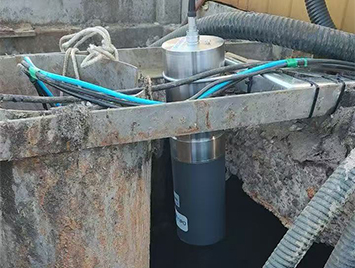
Even small leaks from underground diesel storage tanks can migrate through soil and eventually reach drainage systems or groundwater, causing costly environmental damage and regulatory challenges. To strengthen its leak-detection capability, they deployed OPS DSOD703 Oil Spill Detectors as part of its early-warning monitoring system.
The DSOD703 units were installed above inspection wells and drainage collection channels connected to the underground diesel tank containment area. This configuration enables the detector to continuously monitor the presence of oil on water surfaces within the drainage infrastructure. If leaked diesel reaches the monitoring points, the sensor immediately detects the oil film and triggers an alarm signal to the facility’s control system.
This case demonstrates that the DSOD703 is effective in open water bodies, wastewater channels, and coastal oil facilities, and that it serves as a reliable safeguard for underground fuel storage systems. By integrating oil-on-water detection at drainage and inspection points, industrial operators can establish a practical, cost-effective early-warning network for monitoring diesel storage leaks. ( Read more info: https://opticaldosensor.com/desun-uniwill-dsod703-oil-spill-detectors-installed-on-overseas-diesel-storage-project/ )
Case Study 4: DSOD703 Oil Spill Monitoring & Alarm Systems for Desalination
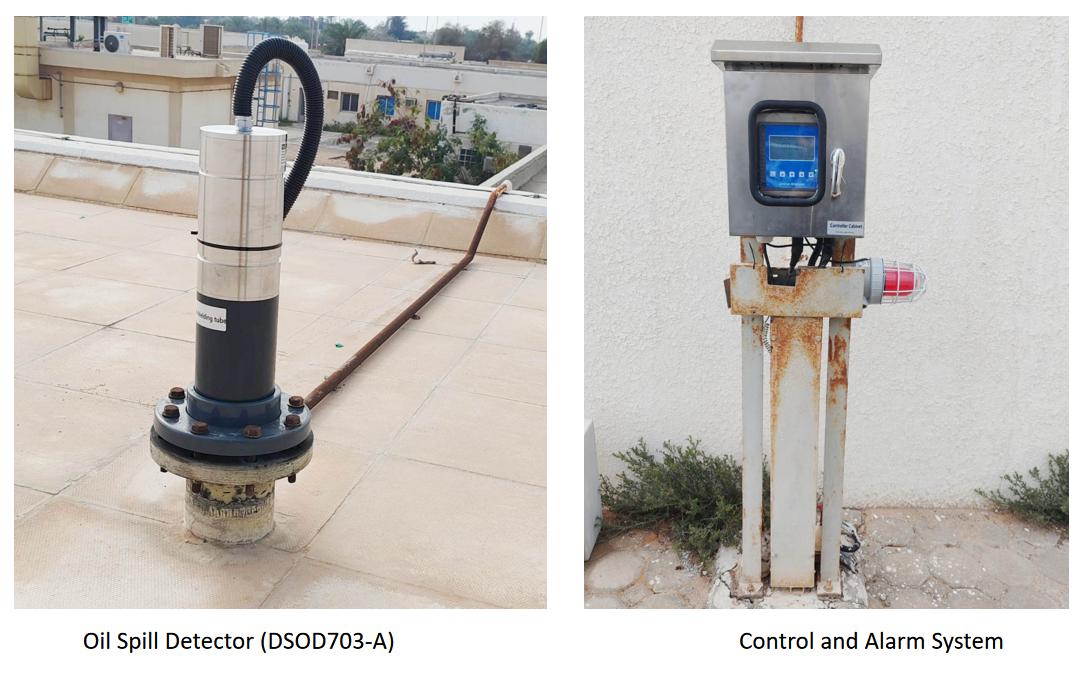
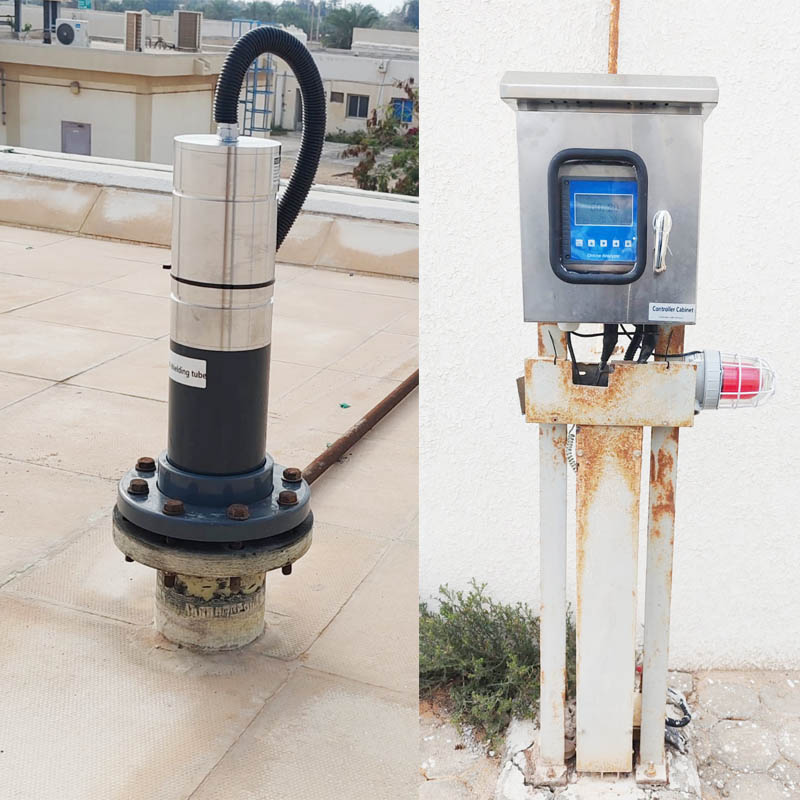
In a seawater desalination facility in the United Arab Emirates, the OPS DSOD703 oil spill detector was installed near seawater intake channels and drainage areas to monitor potential oil contamination from pumps, generators, or maintenance activities. The system continuously monitors the water surface in real time. It triggers immediate alarms when oil films are detected, allowing operators to respond quickly and prevent contamination from entering the desalination process. This deployment significantly improved environmental protection, operational safety, and regulatory compliance while safeguarding critical desalination equipment and surrounding coastal ecosystems. ( Read more info: https://opticaldosensor.com/desun-uniwill-dsod703-oil-spill-monitoring-alarm-systems-installed-in-seawater-desalination-plants-in-the-uae/)
You can trust these solutions to deliver real-time data, improve response, and support both environmental and economic goals.
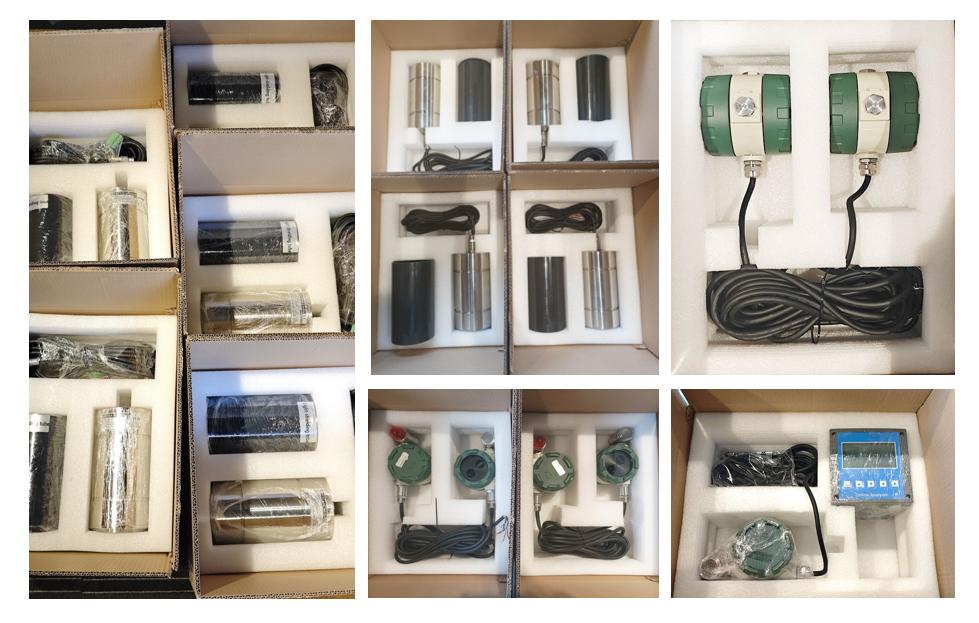
Technical Parameter
| Product Name | Oil Spill Detector/ Oil Film Detector/ Oil On Water Detector/ Oil Slick Detection Sensor |
|---|---|
| Model | DSOD703-B (0-2m) DSOD703-A (0-10m) |
| Certificate | CE, CNEX |
| Principle | UV fluorescence method |
| Measuring Distance | 0-2m and 0-10m from surface |
| Sensitivity | 1μm (micron) oil film |
| Response Time | <5s |
| False Alarm Rate | <1% |
| Interface | RS-485 |
| Power Supply | 12V DC |
| Power Consumption | 7W |
| Dimensions (L x Ø) | Φ110mm*115mm Φ110mm*406mm |
| Protection Level | IP68 |
| Operating Temperature | -20-60℃ |
| Housing Material | Stainless Steel/ Titanium alloy |
Features and Benefits of Oil Spill Detectors
- Long-distance Non-contact Detection Sensor
With non-contact optical monitoring technology, the sensor is unaffected by marine biofouling or oil contamination, requiring no cleaning or maintenance and easier installation. Long-distance detection of oil, with a maximum monitoring distance of 10m above the water surface.
- High Sensitivity
Using UV LED light to excite the oil’s native fluorescence, the sensor can detect oil films as thin as 1 µm, minimizing false alarms.
- Online 24/7 Monitoring
24-hour continuous real-time monitoring, no daytime or nighttime limitations.
- IP68 Waterproof Rating
Rugged IP68-certified sealed design for harsh environments.
- Long Lifetime
Lifetime (>2 years), built-in system calibration, maintenance-free, low power operation (< 10W).
- RS485 Output Signal
The Oil Spill Detection System is equipped with an RS-485 interface that enables fast, easy sensor configuration via Modbus. It can be easily connected to the monitoring system. DSMC5100 can be equipped with it to read real-time monitoring data, and the data storage function provides users with a basis for analyzing the data.
Application Areas of Non-contact Oil Spill Monitoring System

- Waste Water
Monitors oil contamination in wastewater treatment facilities, ensuring compliance with environmental standards.
- Hydro Dam
Detects oil leaks from machinery and equipment, helping to prevent contamination in hydroelectric power reservoirs.
- Airports
Provides continuous monitoring for potential fuel and oil leaks in airport water runoff, protecting surrounding ecosystems.
- Oil Refinery
Enables early detection of oil spills and leaks in refineries, improving environmental safety and operational efficiency.
- Shipping Ports & Harbor
Monitors waterways for accidental oil spills, enabling immediate response and pollution control in busy port areas.
- Manufacturing
Helps detect oil leaks in industrial settings, reducing environmental impact and ensuring cleaner operations.
- Oil Platform
Continuously monitors offshore oil platforms to detect spills and leaks in real-time, minimizing ocean contamination risks.
- Powder Plant
Detects oil leaks in powder production facilities, reducing contamination risks in sensitive production areas.
- Drinking Water
Monitors sources of drinking water to ensure they remain uncontaminated by oil, safeguarding public health.
- Irrigation Canal
Ensures that irrigation channels remain free of oil pollutants, protecting agricultural water quality.
- Fuel Depot
Monitors storage and handling areas at fuel depots, detecting leaks before they impact the environment.
- Aquaculture
Detects oil contamination in aquaculture facilities, protecting water quality for aquatic farming.
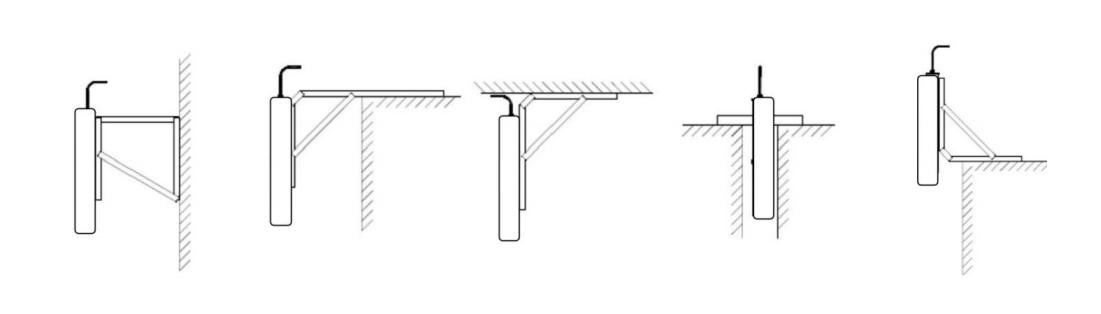
Installation Diagram Reference of Non-contact Oil on Water Detection System
Comparison Table of Oil In Water Sensor and Oil Spill Detector
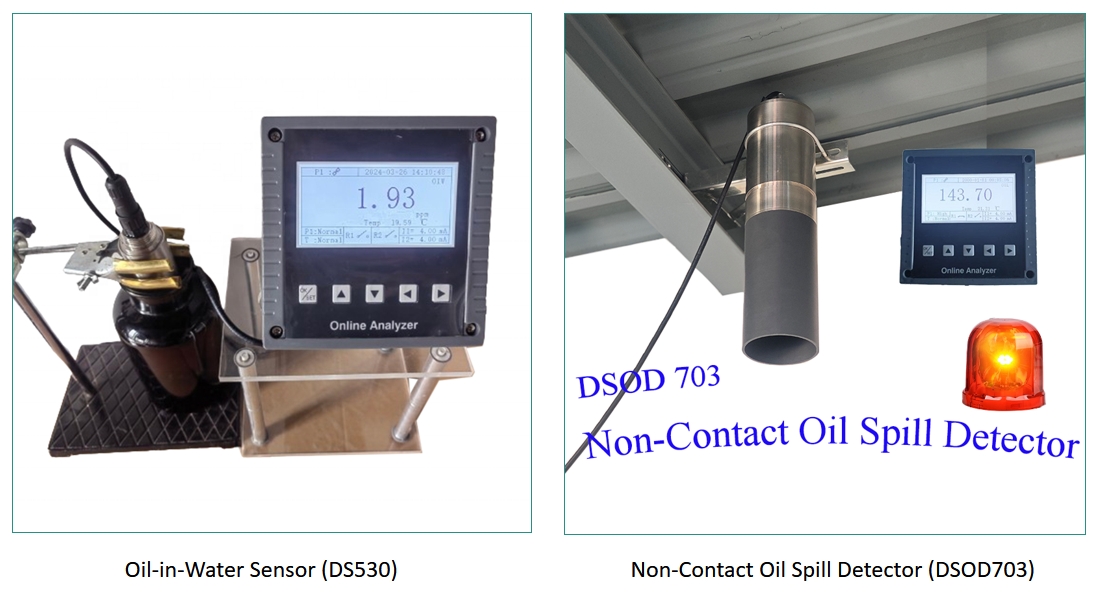
| Item | Oil-in-Water Sensor (DS530) | Non-Contact Oil Spill Detector (DSOD703) |
|---|---|---|
| Measurement Principle | UV Fluorescence Method | UV Fluorescence Method |
| Applicable Oil Types | Heavy oil, etc. | Heavy oil, etc. |
| Installation Method | Submersible installation: installed in water, light-shielded | Non-contact installation: installed above water/ground |
| Light Interference | Affected by natural light, must be installed away from light | No effect within 0–2m range; 0–10m version includes light shield |
| Calibration Method | Requires calibration with standard solution | Calibrated via software only, no standard solution needed |
| Detection Capability | Can measure exact oil concentration in water | Used to quickly detect the presence of oil on the water surface; does not show specific concentration |
| Signal Output | RS485 | RS485 / 4–20mA |
| Power Supply | 12V or 24V DC | 24V DC |
| Application Scenarios | Industrial wastewater, municipal sewage, surface water monitoring, etc. | Oil depots, refineries, ports, power plants, airports, gas stations, industrial wastewater |
FAQs
1. What types of oil can the OPS Oil Spill Detector detect?
The OPS Oil Spill Detector is primarily used for testing industrial oils and cannot measure animal, vegetable, or synthetic oils. It supports testing of crude oil, diesel oil, lubricating oil, kerosene, and other industrial oils.
2. Can the oil spill monitor test the thickness of the oil film on the water surface? How thick can it be tested?
The oil spill detector primarily operates by detecting the fluorescence of petroleum-based substances, recognizing and quantifying the oil film through spectral excitation and signal analysis. Simply put, oil spill monitors cannot directly tell people the exact thickness of the water surface. It can only use the strength of the fluorescent signal reflected from the oil film to determine the amount of leakage, roughly.
We briefly divide the process into three steps:
Step 1: The detector adopts a 365nm UV pulsed LED, which vertically
irradiates the water surface and stimulates the oil film to produce fluorescence.
Step 2: The oil is excited to emit **400-650nm fluorescence** (the peak value varies with the type of oil; for crude oil, about 480nm; for light oil, about 420nm).
Step 3: The detector converts fluorescence data into oil spill alarms or concentration values using signal processing and classification algorithms.
3. What is the thickness or the sensitivity of the oil film that can be detected?
Mainly for oil films floating on the surface of water or the ground, the detection sensitivity is up to 1 micron in thickness (equivalent to 1 liter of oil spreading over 1000 square meters of water).
4. What about anti-interference performance?
Like flowing leaves in the water, plastic, water plants, etc. Non-petroleum substances (e.g., algae, organic debris) have different fluorescence properties and can be excluded from interference by spectral filtering and algorithms. In combination with our controllers, we can set up data to exclude such substances.
5. What is the Temperature limitation of the use environment?
0~60 degrees Celsius.
6. Is it disturbed by sunlight, and is it specially treated during installation?
It will be affected a little bit, so when installing it, we recommend equipping it with a light-avoiding Protective Shell. Of course, it is possible not to use it, but if we want to get a more perfect detection, the light shield will be very useful.
7. Why is detecting oil leaks early important?
Detecting oil leaks is essential for environmental, operational, and safety.
-Environmental Protection
Preventing Ecological Damage: Oil spills can devastate marine and terrestrial ecosystems, affecting plants, animals, and water quality.
Early Detection Minimizes Spread: Sensors can detect spills early, reducing the area affected and enabling quicker response to protect vulnerable habitats.
-Compliance with Regulations
Governments and environmental agencies enforce strict regulations on pollution and spill management. Sensors help organizations monitor and report compliance in real-time.
-Emergency Response
Early detection reduces risks to personnel and infrastructure by initiating containment measures promptly.
-Reducing Cleanup Costs
Early detection of spills limits the spread, significantly reducing cleanup costs.
Deploying oil spill detection sensors is a proactive measure to balance industrial operations with environmental stewardship and regulatory adherence.
8. Where should Non-contact Oil Spill Detectors be installed?
-Detecting oil storage leaks to prevent industrial plant accidents;
-Monitoring oil leaks in wastewater flowing into a wastewater treatment plant;
-Monitoring oil spills into rivers;
-Monitoring oil spills that are entering waterways;
-Oil leak detection in food or pharmaceutical production processes;
-Monitoring oil leaks at specific locations;
-Installation in locations where contact oil detection equipment is difficult to install;
-Manufacturing process requiring control of oil content;
-Places where sleep oil monitoring is required;
-Where surface oil monitoring is required;
-Areas where unmanned oil monitoring is needed in industrial settings.
9. In what situations are oil leaks or spills likely to occur?
Oil leaks or spills can occur in various situations, often due to technical failures, operational errors, environmental factors, or unforeseen accidents. Here are the primary situations where oil leaks or spills are likely:
-Industrial Operations
Pipeline Ruptures: Damage due to corrosion, wear and tear, or external impacts.
Tank and Storage Failures: Structural issues or improper maintenance of oil storage tanks.
Refining and Processing Facilities: Equipment malfunctions or accidents during oil refining and transfer.
Machinery Leaks: Oil leaks from industrial equipment, pumps, or generators.
-Transportation
Marine Oil Spills: Tanker accidents, collisions, or groundings in oceans or rivers.
Pipeline Transportation: Leaks due to pressure changes, corrosion, or natural events.
Rail or Road Transport: Accidents involving vehicles carrying oil or fuel.
Air Transport: Leaks from aircraft fuel systems or during refueling operations.
-Offshore Drilling and Production
Blowouts: Uncontrolled releases of oil or gas during drilling operations.
Platform Failures: Structural damage to offshore rigs or production facilities.
Subsea Equipment Issues: Leaks from underwater pipelines, wellheads, or valves.
-Storage and Handling
Improper Handling: Errors during loading, unloading, or transferring oil.
Aging Infrastructure: Leaks from old or poorly maintained storage systems.
Tank Overfilling: Spills caused by human or mechanical errors during filling.
-Human Error
Operational Mistakes: Incorrect procedures during oil processing or transport.
Negligence: Failing to perform routine maintenance or follow safety protocols.
Spill Containment Failures: Lack of proper systems or oversight to control spills.
10. Who can benefit from using a Non-contact Oil Spill Detection Sensor Instrument?
-Port and coastal agencies, oil companies, ship owners, and oil spill response organizations.
-Anybody who requires reliable round-the-clock oil spill surveillance, support for fast and efficient recovery of oil spills, and efficient deployment of boom and skimmers.
-Oil spill response vessels.
Tags: Oil Detection System, Oil detector sensor, Oil Film Detector, Oil On Water Detection, Oil On Water Detector, oil on water sensor, Oil Slick Detection, Oil Spill Detection, Oil Spill Detection And Monitoring, Oil spill detection instruments, Oil Spill Detection Sensor, Oil Spill Detection System, Oil Spill Detector, oil spill detector manufacturer, oil spill detector Price, Oil Spill Detector Supplier, oil spill monitor, Oil Spill Monitoring, Oil Spill Monitoring System, Oil Spill Sensor, oil leak detection sensor, maritime oil spill detection, offshore oil spill monitoring, port oil spill detector, oil spill detection system supplier, industrial oil spill monitoring solution, suppliers, manufacturers, factory, company, China, wholesale, buy, price, quotation, bulk, for sale, companies, stock, cost.
Videos
Get A Quote Today
Related Blogs
OPS DSOD703 Oil Spill Detectors Installed on Overseas Diesel Storage Project
OPS DSOD703 Oil Spill Detector Installed in Sewage Channels in Russia
OPS DSOD703 Non-Contact Oil Spill Detector Installed at Coastal Oil Depot in Hainan