
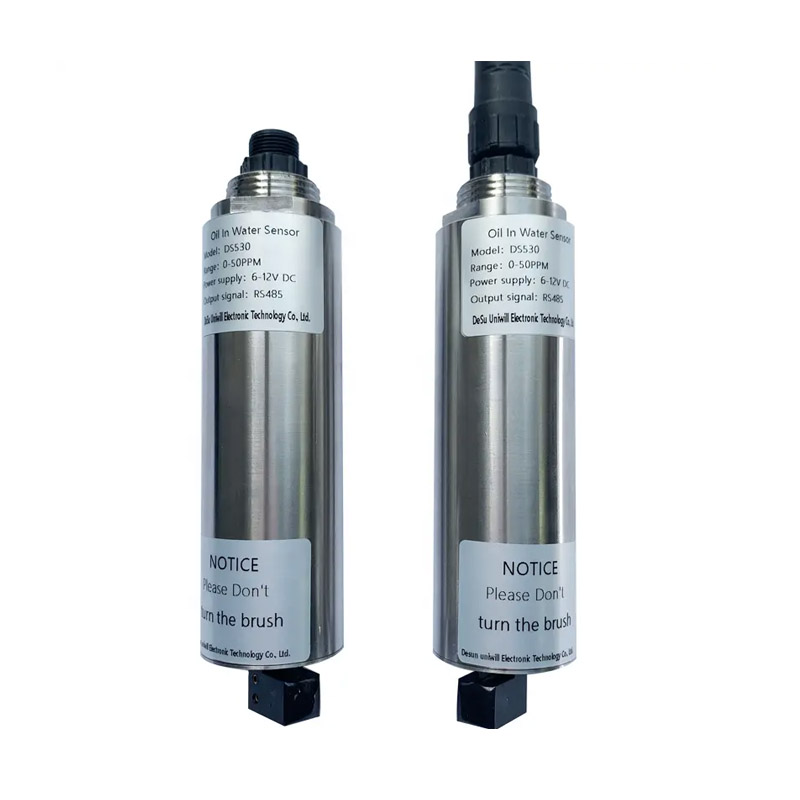
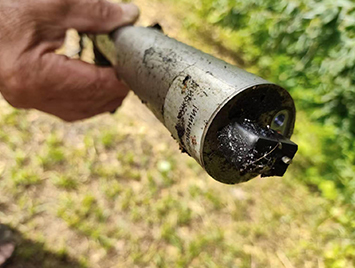
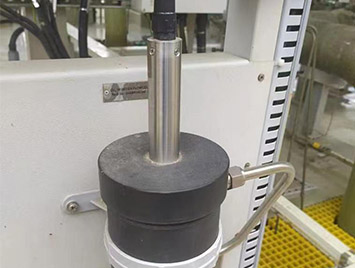
DS530 Oil In Water Sensor Description
The DS530 immersion oil-in-water probe utilizes advanced UV fluorescence measurement technology for continuous online monitoring of oil concentration in water. This technique detects the characteristic fluorescence emitted by oil compounds under ultraviolet excitation, providing high sensitivity and strong selectivity for oil contaminants. Compared with conventional infrared scattering or absorption methods, UV fluorescence offers superior trace oil detection capability and improved resistance to interference.
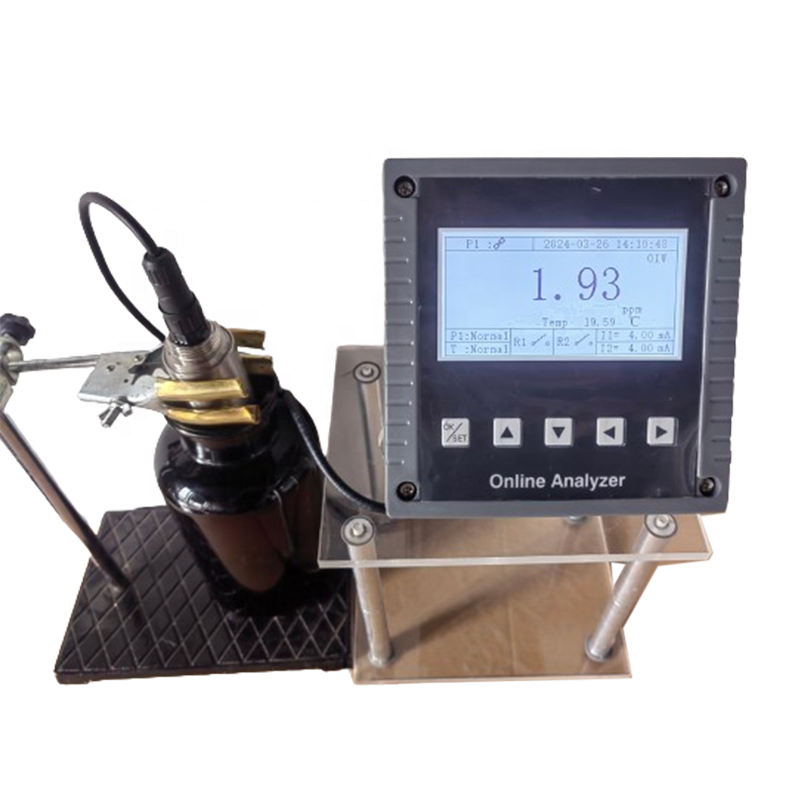
An optional automatic self-cleaning brush system effectively removes air bubbles and fouling from the probe surface during operation, minimizing environmental influences on measurement accuracy. This significantly extends maintenance intervals and ensures excellent long-term stability and repeatability under continuous online operation.
With fast response and reliable performance, the DS530 oil in water analyzer enables early detection and warning of oil contamination, supporting water quality management and process optimization.
Working Principle
The oil content in water is measured using the ultraviolet fluorescence method. When exposed to ultraviolet (UV) excitation, oil components—particularly aromatic hydrocarbons and compounds containing conjugated double bonds—absorb UV energy and emit characteristic fluorescence.
The intensity of the emitted fluorescence is directly related to the concentration of oil present in the water. By detecting and analyzing this fluorescence signal, the sensor performs a quantitative determination of oil concentration. Through calibrated signal processing, the measured fluorescence intensity is converted into an accurate oil-in-water concentration value.
Since aromatic hydrocarbons are a primary source of fluorescence in petroleum products, the UV fluorescence technique provides high sensitivity, strong selectivity, and excellent suitability for trace oil detection, making it well-suited for continuous online monitoring of oil contamination in water.
Technical Parameter
| Product | Oil In Water Sensor / Oil In Water Analyzer / Oil In Water Probe / Oil In Water Detection Sensor |
|---|---|
| Model | DS530 |
| Principle | Ultraviolet fluorescence method |
| Measuring Range | 0-50ppm 0-200ppm (Small range oil in water sensor 0-5ppm can be customized) |
| Precision | 3% |
| Resolution | 0.1ppm or 0.1ppb |
| The detection limit | According to the actual oil sample |
| Linearity | R2>0.999 |
| Protection level | Ip68 |
| Sensor interface | Support RS-485, MODBUS protocol |
| Assembly | Input type |
| Power information | DC 6~12V, current <50mA (when not cleaned) |
| Size | Φ45*175.8 mm |
| Probe cable length | 5 meters (default), can be customized |
| Housing material | 316L (customizable titanium alloy) |
| Self-cleaning Brush | No/Have |
| Optical window | optical fiber |
Online Oil-in-water Sensor Features
Using the principle of fluorescence. Compared with several commonly used methods, the fluorescence method is more efficient, faster, and can be monitored online in real time.
- Digital sensor, RS-485 output, supports MODBUS.
- Withan automatic cleaning brush to eliminate the impact of oil on the measurement.
- Eliminate the effects of ambient light on measurements with unique optical and electronic filtering techniques.
- Unaffected by suspended solids in water.
Installation Cases
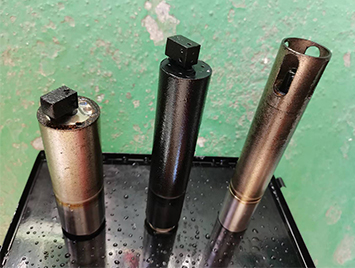
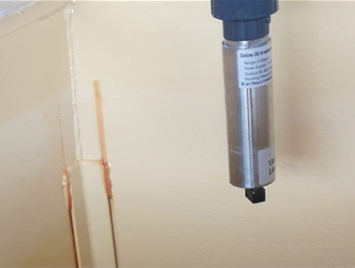
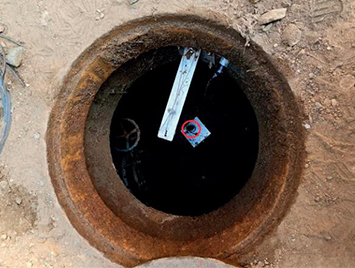
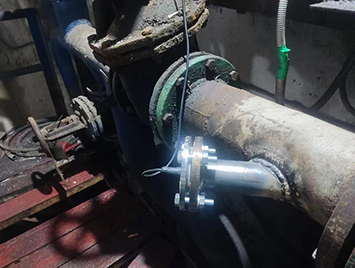
An Oil-in-water Monitoring System is suitable for water quality monitoring scenarios such as oil quality monitoring, industrial circulating water, condensate water, wastewater treatment, and surface water stations.

Applications of Oil-in-Water Sensors
Oil Content in Water Analyzers are widely used for continuous monitoring and early detection of oil contamination in various water systems, including:
Industrial Circulating Water Systems
Monitoring oil leakage in cooling water and closed-loop circulation systems to protect equipment and ensure stable operation.Condensate and Boiler Feedwater Monitoring
Detecting oil ingress in condensate return lines to prevent contamination of boilers and heat exchangers.Wastewater Treatment Plants
Measuring oil content in influent, effluent, and process streams to support treatment efficiency and regulatory compliance.Oil & Gas Industry
Monitoring produced water, oily wastewater, and discharge water from refineries, offshore platforms, and petrochemical facilities.Power Plants
Early detection of oil contamination from turbines, transformers, and lubrication systems.Surface Water and Environmental Monitoring
Continuous monitoring of rivers, lakes, reservoirs, and environmental monitoring stations for oil pollution events.Industrial Process Monitoring
Ensuring product quality and process safety in industries such as petrochemical, chemical, steel, and manufacturing.Leak Detection and Early Warning Systems
Providing real-time alarms for oil leaks to minimize environmental impact and operational risk.
Videos
FAQs About DS530 Oil in Water Sensors
1. What is an Oil in Water Sensor?
An oil in water sensor is a device that detects and measures the concentration of oil or hydrocarbons present in water. It is used in industries such as environmental monitoring, wastewater treatment, and offshore oil and gas operations.
2. How does an oil in water sensor work?
OPS oil in water sensors use UV fluorescence to differentiate oil types.
3. What industries use oil in water monitors?
Oil & Gas: Monitoring leaks and spills in offshore drilling.
Marine & Shipping: Detecting oil discharge in ballast water.
Industrial Wastewater Treatment: Ensuring compliance with environmental regulations.
Power Plants: Monitoring cooling water contamination.
4. What is the detection range of an oil in water sensor?
Detection ranges vary by model.
OPS DS530 measures oil concentrations from 0-200 ppm and a Small measuring range of 0-5ppm can be customized.
5. How do I calibrate an oil in water sensor?
Most sensors require periodic calibration using a known oil standard. Some models feature automatic calibration and self-diagnostics for easier maintenance.
6. What factors affect sensor accuracy?
Temperature & Salinity: Can influence sensor response.
Particle Interference: High turbidity or suspended solids may impact readings.
Oil Type: Different oils have varying fluorescence/absorption properties.
Biofouling: Marine environments may require frequent cleaning.
7. How do I maintain an oil in water sensor?
Clean the sensor regularly to remove fouling.
Calibrate according to the manufacturer’s guidelines.
Protect the sensor from extreme environmental conditions.
Inspect cables and connections for damage.
8. Can an online oil in water analyzer differentiate between oil types?
Some advanced fluorescence-based sensors can distinguish between crude oil, diesel, lubricating oil, and other hydrocarbons based on their unique fluorescence signatures.
Related Products
Related Articles
10 sets oil in water sensors and controllers will be sent to Russia


