PAH Sensor Blog

PAH Sensor Blog

PAH+PH+Turbidity Sensors-OPS

OPS Ships 7 Sets of PAH, pH and Turbidity Sensors to South Korea for Marine EGCS Systems

South Korea | Marine Environmental Monitoring | EGCS Compliance OPS, a professional manufacturer of marine and industrial water quality sensors, has announced the successful shipment of 7 sets of PAH (Polycyclic Aromatic Hydrocarbon), pH, and Turbidity sensors to South Korea. The sensors will be deployed in Marine Exhaust Gas Cleaning Systems (EGCS) to support […]

OPS Ships 7 Sets of PAH, pH and Turbidity Sensors to South Korea for Marine EGCS Systems Read More »
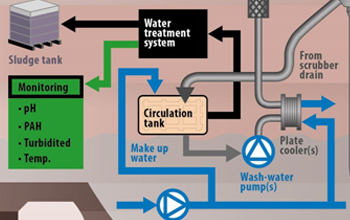
PAH sensor in EGCS

In which module is the PAH sensor used in the EGCS

In an Exhaust Gas Cleaning System (EGCS), PAH (Polycyclic Aromatic Hydrocarbons) sensors are typically integrated into the Emission Monitoring System module. This module is responsible for the real-time monitoring of various pollutants in the exhaust gas, including PAH. Here is the detailed location and application of PAH sensors within the Emission Monitoring System module: PAH

In which module is the PAH sensor used in the EGCS Read More »

Main Components and Functions of Emission Monitoring System in an EGCS

The emission monitoring system in an Exhaust Gas Cleaning System (EGCS) is critical for ensuring that emissions are within environmental regulations and for optimizing the system’s performance. Here are the main components and functions of the emission monitoring system in an EGCS: Main Components of Emission Monitoring System Sampling Probes: Function: Installed in the exhaust

Main Components and Functions of Emission Monitoring System in an EGCS Read More »

Key Factors to Consider for PAH Sensor Monitoring

Real-time PAH sensors are crucial for monitoring air quality. Polycyclic Aromatic Hydrocarbons (PAHs) are a group of organic compounds with multiple aromatic rings. They are found in the environment primarily due to incomplete combustion of organic matter and are known for their potential health hazards. When selecting and implementing a Polycyclic Aromatic Hydrocarbon (PAH) sensor

Key Factors to Consider for PAH Sensor Monitoring Read More »

Application Areas of Online PAHs Sensors: Advancing Detection and Monitoring

Online PAHs sensors have become invaluable tools in various industries and environments, providing accurate and reliable detection and monitoring of polycyclic aromatic hydrocarbons. This article explores the diverse application areas where PAHs sensors are making a significant impact. 1. EGCS (Exhaust Gas Cleaning Systems): Online PAHs sensors play a crucial role in EGCS installations, ensuring

Application Areas of Online PAHs Sensors: Advancing Detection and Monitoring Read More »

Key Parameters need to be Monitored In an Exhaust Gas Cleaning System (EGCS)

In an Exhaust Gas Cleaning System (EGCS), the following key parameter indicators need to be monitored and evaluated after treatment to ensure that the exhaust emissions comply with environmental regulations and to assess the system’s performance and effectiveness: 1, Sulfur Oxides (SOx) Concentration: Monitoring Significance: SOx (particularly SO2) is the primary target of EGCS treatment,

Key Parameters need to be Monitored In an Exhaust Gas Cleaning System (EGCS) Read More »

Why do exhaust gas cleaning systems (EGCS) need a PAH measurement sensor?

Polycyclic aromatic hydrocarbons (PAHs) are a group of organic compounds that contain two or more fused aromatic rings. They are often formed during the incomplete combustion of organic matter, including the combustion of fossil fuels in internal combustion engines. PAHs are considered environmental pollutants and can have adverse effects on human health. (PAH measurement sensor) There

Why do exhaust gas cleaning systems (EGCS) need a PAH measurement sensor? Read More »

OPS Low-Cost Online PAHs Analyzer: Protecting the Environment

Are you seeking a reliable and affordable solution to monitor Polycyclic Aromatic Hydrocarbons (PAHs) in the environment? Our innovative Online PAHs Analyzer offers precise and cost-effective detection, making it an essential tool for environmental monitoring agencies, research institutions, industrial facilities, and public health organizations. Key Features of OPS Low-Cost Real-time PAHs Analyzer: 1, Precision: Our Online PAHs Analyzer delivers accurate

OPS Low-Cost Online PAHs Analyzer: Protecting the Environment Read More »

Sources and impacts of Polycyclic Aromatic Hydrocarbons (PAHs) in water

Polycyclic aromatic hydrocarbons (PAHs) in water are a class of organic compounds that are widely found in natural and man-made environments and are usually produced through combustion processes. PAHs are toxic and potentially harmful to human health and ecosystems. From Natural Sources: -Oil and gas: PAHs can be released from crude oil, natural gas, and

Sources and impacts of Polycyclic Aromatic Hydrocarbons (PAHs) in water Read More »

Update cookies preferences