

The Necessity of Using the Oil Spill Detection and Monitoring System
Oil spills pose an ongoing environmental, economic, and operational risk for any industry that handles petroleum-based substances. Even a thin sheen of oil can have significant consequences—damaging ecosystems, polluting water sources, harming aquatic life, and triggering costly fines and cleanup operations. In environments such as coastal depots, petrochemical plants, offshore platforms, ports, and wastewater treatment sites, early detection is essential.
Traditional inspection methods—manual sampling, visual checks, or contact probes—often fail to provide reliable and continuous monitoring. These approaches are time-consuming, subject to human error, and too slow to catch spills during their earliest stages. In contrast, modern industries require automated, precise, real-time detection systems that ensure safety, compliance, and immediate intervention.

The OPS Oil Spill Detection and Monitoring System was developed to address this critical need. Designed for continuous 24/7 monitoring, it enables operators to identify oil film formation instantly, reducing environmental impact and improving emergency response capabilities.
Features and Advantages of the OPS Oil Spill Detection and Monitoring System
At the core of OPS’s solution is the DSOD703 Non-Contact Oil Spill Detector, which utilizes UV-fluorescence technology to detect oil films with extreme sensitivity and reliability.
Key Features & Benefits
1. UV Fluorescence Detection Technology
Using a 365 nm UV light source, the DSOD703 detects the natural fluorescence emitted by petroleum oils. The emitted light is captured and analyzed, enabling highly accurate detection even in challenging lighting conditions.
2. Ultra-High Sensitivity (Down to 1 µm Oil Film)
The system detects oil films as thin as 1 micron, allowing operators to respond before a spill escalates. Early detection reduces cleanup costs and prevents environmental damage.
3. Non-Contact Design for Maintenance-Free Operation
The sensor is installed above the water surface, preventing corrosion, biofouling, and mechanical wear. This non-contact design guarantees long-term stability with minimal upkeep.
4. Long Detection Range (0–10 meters)
With adjustable monitoring distances up to 10 meters, DSOD703 accommodates various installation scenarios—from docks and reservoirs to drainage channels and offshore platforms.
5. Fast Response Time (<10 seconds)
Real-time monitoring ensures immediate alerts for oil film formation, enabling rapid intervention.
6. Robust Construction and IP68 Protection
Available in SS316, titanium, or corrosion-resistant engineering plastics, the DSOD703 withstands harsh marine and industrial environments with IP68 waterproof protection.
7. Integration-Friendly Interfaces
With RS485 (Modbus RTU) and optional 4–20 mA output, the system integrates seamlessly into SCADA, DCS, and environmental monitoring platforms.
8. Anti-Interference Algorithms
Advanced spectral processing eliminates false alarms caused by algae, debris, or organic materials—ensuring reliable results in all weather and water conditions.
Case Studies of the OPS Oil Spill Detection and Monitoring System
Case Study 1: Coastal Oil Depot in Hainan
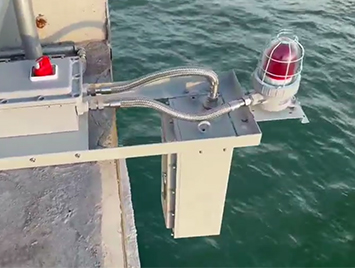
A major coastal oil storage facility in Hainan implemented the DSOD703 to strengthen its environmental safety measures. Positioned above the water near loading zones, the system provides continuous real-time monitoring. Operators now receive instant alerts at the earliest signs of oil leakage, enabling containment before the spill spreads. The depot reports a significant improvement in operational environmental compliance and risk reduction.
Case Study 2: Installation in Sewage Channels, Russia
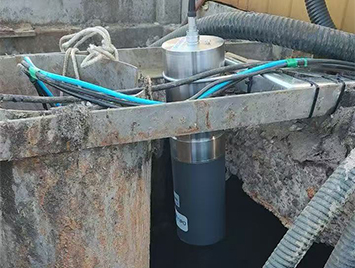
In an industrial wastewater system in Russia, the OPS DSOD703 oil spill detector was deployed above sewage channels to address long-standing risks of hydrocarbon contamination. This project demonstrates that the DSOD703 is not limited to open-water environments—it is equally effective in wastewater channels, drainage conduits, and industrial effluent pathways. This Russian deployment greatly enhanced operational visibility for wastewater treatment personnel, helping them manage pollution risks more effectively and maintain environmental compliance.
Applications of the OPS Oil Spill Detection and Monitoring System
The versatility of the DSOD703 makes it a powerful solution for numerous industries:
1. Oil Storage Depots & Tank Farms
In tank farms, above-ground storage tanks (ASTs), transfer manifolds, and containment berms represent critical leakage points. The system integrates optical sensing modules, hydrocarbon-specific spectral analysis, and real-time analytics to detect surface sheen formation and micro-scale leaks.
Monitoring coverage includes:
Tank bottom perimeters to identify seepage from corrosion or weld failure
Bund/containment drainage channels to prevent uncontrolled release during rainfall events
Truck loading bays and pipeline headers where transient overfill and hose failures occur
Data can be streamed to the facility SCADA or DCS system to trigger automated valve shutdowns or activate containment pumps.
2. Ports, Harbors & Shipyards
Fuel bunkering, vessel maintenance, and cargo operations generate a high risk of hydrocarbon discharge into coastal waters.
Typical deployment points include:
Berthing areas and fueling docks
Dry-dock discharge outlets
Stormwater outfalls connecting to marine basins
Automated alarms enable port authorities to coordinate containment booms and dispatch marine pollution response units before widespread dispersion occurs.
3. Offshore Oil Platforms
Offshore platforms require continuous monitoring due to harsh environmental conditions and remote locations.
Functional roles include:
Early identification of leaks from subsea risers, flare booms, and process modules
Detection of sheen around produced-water outlets
Integration with platform safety systems (ESD, F&G) for automatic isolation
This early-warning capability minimizes environmental exposure and reduces the need for costly production shutdowns.
4. Petrochemical & Refining Facilities
Refineries feature complex wastewater routing systems where even minor oil leakage can disrupt treatment processes.
Primary application zones include:
API separators and dissolved air flotation (DAF) units
Wastewater retention ponds
Process drainage networks and plant effluent discharge points
The system ensures compliance with effluent oil-content regulations and supports environmental incident traceability.
5. Industrial Wastewater Treatment Plants
Oil contamination can compromise biological treatment efficiency and damage downstream filtration equipment.
The system provides:
Continuous detection of surface oil films at inlet channels
Monitoring of secondary clarifiers to prevent sludge flotation caused by trapped hydrocarbons
Tracking of final discharge points to ensure pollutant load meets legal thresholds
Alarms and historical trend data allow operators to isolate upstream polluters and optimize plant load balancing.
6. Hydropower Plants & Dam Reservoirs
Reservoirs require protection from upstream industrial discharge and internal facility leaks, such as turbine lubricants.
Technical functions include:
Identifying oil slicks at intake towers and spillways
Monitoring penstock discharge water quality
Enabling rapid response to hydraulic equipment oil leakage
These measures safeguard water quality and protect sensitive downstream ecosystems.
7. Airports
Airport apron operations involve frequent fuel handling, making stormwater contamination a key environmental risk.
Key monitoring points:
Aircraft refueling zones
Hangar maintenance facilities
Apron stormwater collection basins
Real-time alerts help airport environmental teams isolate contaminated drainage segments and deploy spill-response units before pollutants reach natural waterways.
8. Drinking Water Sources & Aquaculture Zones
For drinking-water intakes and aquaculture farms, even trace levels of oil can cause biological stress or render water unsafe.
The system ensures:
Early detection of oil films drifting toward water intake towers
Continuous surveillance around aquaculture cages, ponds, or coastal farming sites
Integration with automated gate/sluice controls to divert contaminated inflows
This provides a safeguard against accidental upstream discharges and supports long-term water-quality management.
The OPS DSOD703 Oil Spill Detection and Monitoring System delivers cutting-edge technology for real-time, reliable, and highly sensitive oil detection. With its advanced UV-fluorescence method, non-contact design, long monitoring distance, and industrial-grade durability, the system meets the demands of modern environmental protection and industrial safety.
For any organization operating near water—whether industrial, municipal, or maritime—the DSOD703 provides the vigilance and peace of mind needed to protect assets, maintain compliance, and preserve the environment.
Get a customized quote tailored to your application.
Tags: oil spill detector, oil spill detection system, oil spill monitoring, oil spill detection and monitoring, oil spill monitoring system, oil spill detection, non-contact oil spill sensor, UV fluorescence oil detector, DSOD703, OPS oil spill detection, real-time oil spill monitoring, water surface oil film detection, industrial oil leak detector, offshore oil spill monitoring, port oil spill detection, petrochemical oil leak monitoring, wastewater oil detection sensor, environmental monitoring sensor, oil film detection technology, IP68 oil spill detector, high sensitivity oil spill sensor, oil spill early warning system, marine oil pollution monitoring, automatic oil spill detection, hydrocarbon leak detector, oil spill monitoring solution.
Related Product:
Non-contact DSOD703 Oil Spill Detector
Related Videos:
Related Blogs:
5 Sets of OPS DSOD703 Oil Spill Detectors Shipped to the Middle East for Seawater Desalination Project
OPS DSOD703 Oil Spill Detector Installed in Sewage Channels in Russia
OPS DSOD703 Non-Contact Oil Spill Detector Installed at Coastal Oil Depot in Hainan
To send An Enquiry Now: