
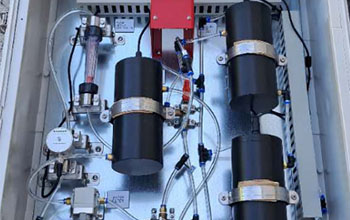
The three types of oil sensors: Oil-in-Water Sensor, PAH Sensor, and Oil Spill Detector Sensor are developed by OPS and are primarily designed for monitoring oil. These sensors suit environmental monitoring, industrial process control, and other related fields. All three sensors are based on UV fluorescence technology, aimed at providing real-time, efficient oil detection while meeting environmental monitoring requirements.
The differences among these three oil sensors are as follows:

Functions
DS530 Online Oil-in-Water Sensor: This sensor is used for online measurement of oil concentration in water, with a range of 0-200 ppm. It is suitable for monitoring oil pollution in industrial wastewater and surface water.
PAH Sensor: This sensor is specifically designed to measure the concentration of polycyclic aromatic hydrocarbons (PAHs) in water. It is often used in Shipwash water monitoring systems to ensure compliance with environmental standards.
Non-Contact Oil Spill Detection Sensor: This sensor detects the thickness of oil films on water surfaces in real time. Its non-contact measurement design makes it ideal for oil spill monitoring and early warning systems.
Application Scenarios
DS530 Online Oil-in-Water Sensor: Used for industrial wastewater, municipal sewage discharge, and surface water pollution monitoring.
PAH Sensor: Particularly suitable for Shipwash water monitoring and wastewater control in petrochemical enterprises.
Non-Contact Oil Spill Detection Sensor: best suited for large-scale water areas, such as oceans, rivers, and ports, for oil spill detection.
Technical Features
DS530 Online Oil-in-Water Sensor: Features high precision, real-time monitoring, a wide range (0-200 ppm), and supports various installation methods.
PAH Sensor: Capable of identifying and quantifying PAHs to ensure compliance with environmental regulations.
Non-Contact Oil Spill Detection Sensor: Its non-contact design prevents direct interaction with oil films, improving sensor durability and flexibility.
Unique Characteristics
DS530 Online Oil-in-Water Sensor: Focuses on routine oil pollution monitoring, covering a broader range of industrial and municipal applications.
PAH Sensor: Specializes in PAH detection, offering professional capabilities in niche areas with stringent regulatory requirements.
Non-Contact Oil Spill Detection Sensor: Prioritizes rapid response and early warning for oil spills in environmental protection scenarios.
Differences in Measured Objects
Oil in Water Sensor: Primarily measures the total oil concentration in water, including the overall amount of various oil pollutants. It helps monitor the presence of oil substances in water, especially in cases where oil concentration in water needs to be detected, such as industrial wastewater discharge.
PAH Sensor: Specially designed to measure the concentration of polycyclic aromatic hydrocarbons (PAHs) in water. PAHs are organic chemical substances with potential environmental hazards, typically originating from petroleum contamination. PAH sensors are suitable for more specific pollution monitoring, especially for monitoring ship and marine pollution.
Oil Spill Detector Sensor: Primarily monitors the thickness of the oil film on the water surface. It is mainly used for detecting and alerting oil spills on the water surface. This sensor is typically used in early warning systems for oil leaks, particularly in large water areas, allowing for the timely detection and handling of oil spills.
Maintenance and Reliability
Oil in Water Sensor: These sensors usually require regular calibration, especially when used in high oil concentrations or polluted environments, to maintain measurement accuracy and reliability.
PAH Sensor: Due to the complexity of PAH substances, these sensors may require more precise calibration and more frequent maintenance, especially when concentrations are low.
Oil Spill Detector Sensor: Due to its non-contact design, oil spill detector sensors are generally less affected by oil contamination, so their maintenance frequency is relatively low. However, they still need to be regularly checked to ensure the sensor’s cleanliness and functionality.
Applicable Regulations and Standards
Oil in Water Sensor: Suitable for various industrial wastewater discharge standards, such as the “Water Pollution Prevention and Control Law,” as well as specific discharge requirements for the petroleum and chemical industries.
PAH Sensor: Specifically designed to comply with environmental protection regulations, especially for detecting PAH pollutants in ship and port wash water discharges, by the International Maritime Organization (IMO) and other marine environmental protection regulations.
Oil Spill Detector Sensor: Suitable for emergency response to oil spill incidents and environmental protection regulations, particularly in marine oil pollution control and early warning systems, and conforms to relevant environmental monitoring and emergency response standards.
Response Time and Sensitivity
Oil in Water Sensor: Typically has high sensitivity and can quickly respond to changes in oil concentration in water, making it especially suitable for real-time monitoring in industrial processes. However, some oil in water sensors may be sensitive to the stratification phenomenon between oil and water, so finer adjustments may be needed under extreme conditions.
PAH Sensor: These sensors are highly sensitive for detecting PAH pollution, and able to accurately detect PAH molecules at low concentrations. Since PAH concentrations are typically low, the response time of the sensor may be slightly longer, but it provides precise pollution source analysis.
Oil Spill Detector Sensor: These sensors generally have a short response time and can detect the presence of oil at the early stages of oil film formation. Their sensitivity mainly depends on the thickness of the oil film on the water surface and the type of oil, and they can usually provide a timely response even to thin oil films.
Data Processing and Output
Oil in Water Sensor: These sensors typically provide real-time oil concentration data, and after signal processing, the output values can be integrated with other monitoring devices to generate pollution reports. Data output is usually transmitted to monitoring systems via analog or digital signals.
PAH Sensor: Due to the specific nature of PAHs, these sensors usually provide detailed reports on PAH concentrations, often identifying both concentration levels and pollution source types. Their data processing capabilities are strong, allowing for sensitive responses to environmental changes.
Oil Spill Detector Sensor: The output data typically provides real-time information about oil film thickness or the presence of oil films, often triggering an alarm system to issue a warning. The data output from these sensors is simple and intuitive, mainly used for real-time monitoring and quick response.
Installation and Ease of Operation
Oil in Water Sensor: The installation process is usually straightforward, with the sensor mounted at water flow monitoring points or discharge outlets. The user interface is generally intuitive, making it suitable for long-term monitoring in a variety of environmental conditions.
PAH Sensor: Due to its specialized nature, the installation and operation of PAH sensors may be more complex, especially in environments requiring high accuracy. Professional installation and calibration are typically needed to ensure accurate data.
Oil Spill Detector Sensor: Installation and operation are relatively simple, making it suitable for rapid deployment, especially in emergency response systems. Its non-contact design allows for quick deployment without direct contact with the water body, making it easy to operate.
Each of these three oil sensors has unique functions and technical characteristics. It is very important to choose the right sensor according to different application requirements:
Oil-water sensors are suitable for a wide range of oil pollution monitoring, especially in industrial wastewater treatment.
PAH sensors are more suitable for areas with strict regulatory requirements for PAH pollution, such as ship emission monitoring.
Oil spill detection sensors focus on rapid response to oil spill incidents and are suitable for oil pollution warnings in large areas of water such as oceans and rivers.
Choosing the right sensor will directly affect the efficiency and accuracy of oil pollution monitoring. I hope this analysis can help you better understand the differences between the three sensors and provide a reference for your application.
Tags: oil Sensors, Oil-water sensors, PAH sensors, Oil spill detection sensors, Oil Spill Detector Sensor, Suppliers, manufacturers, factory, wholesale, buy, price, quotation, bulk, for sale, companies, stock, cost.
Related Products:
UV Fluorescence Non-contact Oil Spill Detection Sensor
PAH Sensor for Marine Scrubbers Wash Water Monitoring System
DS530 Online Oil In Water Sensor 0-200ppm
To send An Enquiry Now: