
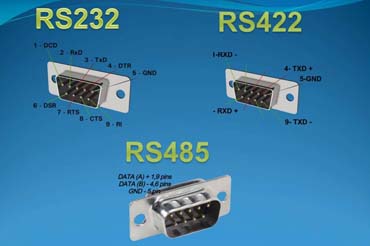
Modbus is a widely adopted serial communication protocol in industrial automation. However, understanding how Modbus works across different physical layers—RS232, RS422, and RS485—can be confusing for engineers, system integrators, and maintenance teams.
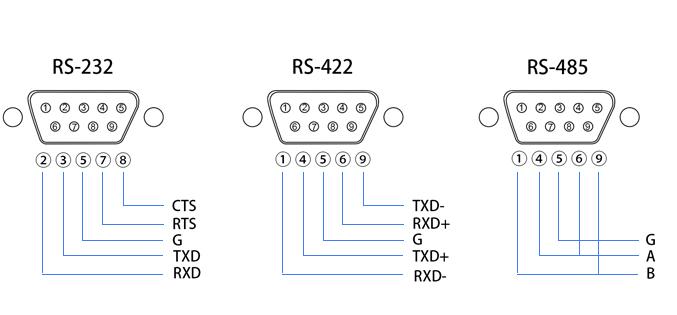
In this article, we’ll break down the differences between RS232, RS422, and RS485 Modbus, their strengths, and how to convert between them effectively.
What Is RS422 Modbus?
RS422 Modbus refers to the Modbus protocol transmitted over the RS-422 electrical standard. RS-422 is a differential signaling method that supports longer distances and better noise immunity than RS232.
Key features of RS422 Modbus:
Point-to-multipoint: 1 transmitter to up to 10 receivers
Transmission distance: up to 1,200 meters (4,000 feet)
Speed: up to 10 Mbps over short distances
Half-duplex communication (typical in Modbus RTU setups)
Better EMI resistance than RS232
RS422 is ideal for use in industrial control systems and applications requiring long-distance, high-speed serial communication without a full multi-point network.
What Is RS232 Modbus?
RS232 Modbus uses the traditional RS-232 serial communication standard to carry Modbus messages. It’s the oldest and simplest serial protocol, but it has significant limitations.
Key features of RS232 Modbus:
Point-to-point only (1 transmitter to 1 receiver)
Short transmission distance: up to 15 meters (50 feet)
Lower speed: generally 20 kbps to 115.2 kbps
Susceptible to noise over long cables
Still widely used in legacy systems and simple Modbus RTU setups
RS232 is best suited for direct device-to-device communication, such as a PLC to HMI or SCADA interface over a short range.
What Is RS485 Modbus?
RS485 Modbus is the most widely used physical layer for the Modbus RTU protocol in industrial environments. It allows for multi-point communication over long distances with excellent noise immunity.
Key features of RS485 Modbus:
Multi-point network: up to 32 devices (some chips support more)
Transmission distance: up to 1,200 meters
Half-duplex (2-wire) or full-duplex (4-wire) setups
Differential signaling for strong resistance to electrical noise
Supports multi-master and master-slave configurations
RS485 is the de facto standard for Modbus RTU networks because it strikes a balance between cost, performance, and scalability.
What Is the Difference Between RS422, RS232, and RS485 Modbus?
Here’s a quick comparison of RS232 vs RS422 vs RS485 in a Modbus context:
| Feature | RS232 | RS422 | RS485 |
|---|---|---|---|
| Topology | Point-to-point | Point-to-multipoint | Multipoint (bus) |
| Max Devices | 2 (1:1) | 1 transmitter, 10 receivers | 32+ devices |
| Distance | ~15 meters (50 ft) | ~1,200 meters (4,000 ft) | ~1,200 meters |
| Duplex Mode | Full-duplex | Half-duplex (mostly) | Half/full duplex |
| Noise Immunity | Low | Medium | High |
| Speed | Up to 115.2 kbps | Up to 10 Mbps | Up to 10 Mbps |
| Modbus Support | Yes (limited range) | Yes (longer range) | Yes (most common) |
Summary:
RS232: Great for short, simple connections.
RS422: Better for longer one-to-many connections.
RS485: Best for robust multi-device industrial networks.
How to Convert RS-422 to RS-485?
Converting from RS-422 to RS-485 is relatively straightforward with a compatible converter or transceiver.
Steps to Convert RS422 to RS485:
Use a protocol converter or RS-422/RS-485 transceiver module.
Match baud rates, parity, and stop bits on both sides.
Check wiring: RS422 typically uses 4 wires, while RS485 often uses 2.
Ensure proper termination resistors at both ends of the RS485 line.
Verify signal direction and polarity (A/B lines may need swapping).
Tip: Some converters support auto-direction control, which simplifies setup.
How to Convert RS-232 to RS-485?
Converting from RS-232 to RS-485 is common when upgrading older equipment.
Steps to Convert RS232 to RS485:
Use an RS-232 to RS-485 converter (external or embedded).
Connect the RS-232 device to the converter’s serial port.
Set the correct communication parameters (baud rate, parity, etc.).
Wire the RS-485 side according to the Modbus RTU standard (usually 2-wire).
Add termination resistors and biasing if necessary.
Tip: Use isolated converters to prevent ground loops and electrical damage.
Understanding the differences between RS232, RS422, and RS485 Modbus is essential when designing or troubleshooting serial Modbus networks.
Use RS232 for simple, short-distance connections.
Choose RS422 when you need longer reach but don’t require full bus communication.
Due to its versatility and robustness, go with RS485 for most industrial Modbus RTU installations.
Before converting between these standards, always verify your device specs, double-check wiring, and use quality converters to avoid communication failures.
Tags: RS232 vs RS485, RS422 vs RS485 Modbus, RS232 to RS485 converter, Modbus RTU communication, RS485 serial protocol, RS232 Modbus wiring, RS485 vs RS422 difference, Industrial Modbus communication.