
The COD sensors market is part of the broader water quality monitoring industry. COD sensors measure the amount of oxygen required to chemically oxidize organic and inorganic compounds in water, an important parameter for assessing water pollution levels. These sensors are used in various industries, including wastewater treatment, environmental monitoring, food & beverage, pharmaceuticals, and more. Below is an overview of the key elements of this market:
1. Short Description Of the COD Sensors Market
The Global COD Sensors market is anticipated to rise at a considerable rate during the forecast period, between 2023 and 2031. In 2022, the market is growing at a steady rate and with the rising adoption of strategies by key players, the market is expected to rise over the projected horizon.
2. COD Sensors Market Drivers
Regulatory requirements:
Governments and regulatory bodies are imposing stringent environmental regulations regarding wastewater treatment and discharge standards. This is pushing industries to adopt advanced water quality monitoring systems, including COD sensors.
Industrial waste management:
As industrial activities grow globally, there is an increasing need to manage industrial wastewater. Industries such as chemicals, pharmaceuticals, food & beverage, and energy are major consumers of COD sensors for monitoring effluent.
Growing water scarcity and pollution concerns:
The increasing emphasis on sustainable water management, especially with the rise of water scarcity and pollution concerns worldwide, is encouraging investments in water quality monitoring technology.
3. Market Segmentation
By Product Type:
Portable COD Sensors: These are small, easy-to-use devices designed for field applications.
Benchtop COD Sensors: These sensors are used in laboratory settings for accurate, high-precision measurements.
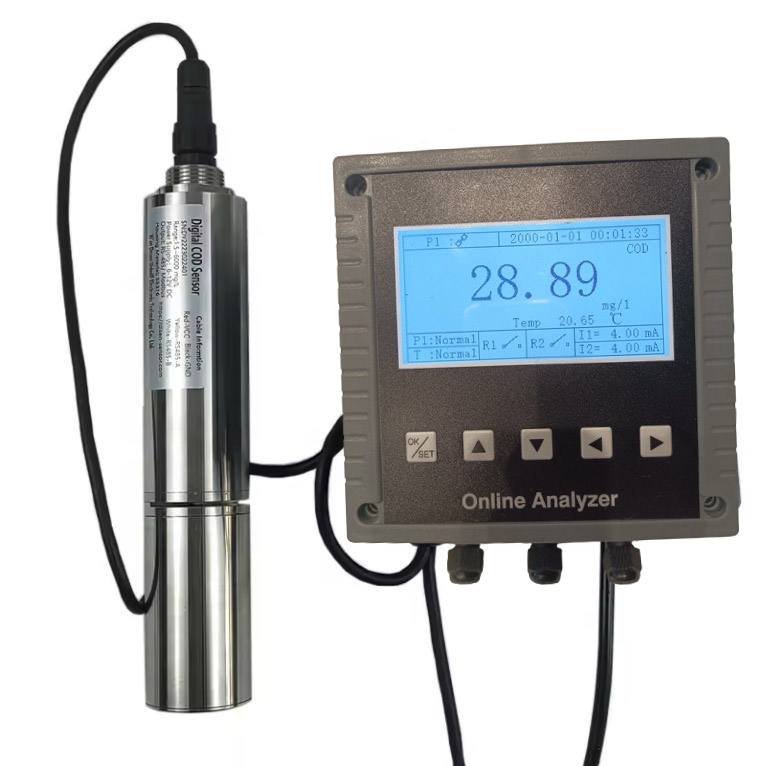
In-line COD Sensors: These are integrated into industrial processes for continuous real-time monitoring.
By Application:
Wastewater Treatment Plants: The largest application area, particularly in municipal and industrial sectors.
Environmental Monitoring: Used for monitoring water bodies such as rivers, lakes, and oceans to assess pollution levels.
Food & Beverage Industry: Used to measure the effluent discharge and maintain regulatory compliance.
Chemical and Pharmaceutical Industries: Essential for monitoring and treating effluents with organic contaminants.
By End-User:
Municipalities
Industrial users (Chemical, Petrochemical, Oil & Gas, Food & Beverage, Pulp & Paper)
Environmental agencies
4. COD Sensors Market Market Trends
Automation and IoT Integration:
The integration of COD sensors with IoT platforms is becoming popular for remote monitoring and automation of water treatment processes.
Rising adoption of optical sensors:
These sensors, which provide faster and more reliable results, are gaining traction in the market over traditional electrochemical COD sensors.
Real-time monitoring systems:
There’s an increasing demand for real-time water quality monitoring systems, particularly in smart cities and industries, to track pollution levels and respond swiftly to changes.
5. Challenges
High Initial Investment:
Advanced COD sensors, particularly those integrated with automation and IoT systems, require a significant upfront investment, which can be a barrier for smaller companies or municipalities.
Maintenance and Calibration:
COD sensors require regular maintenance and calibration to provide accurate readings, which can be a challenge in harsh industrial environments.
6. Regional Analysis
North America: A mature market driven by stringent environmental regulations and high awareness of water quality monitoring.
Europe: Has a strong regulatory framework for water management, particularly in countries like Germany, the UK, and the Netherlands.
Asia-Pacific: Expected to witness the fastest growth due to increasing industrialization and urbanization, along with rising water pollution concerns in countries like China and India.
Latin America & MEA: Growth is driven by emerging environmental regulations and infrastructure development in these regions.
7. COD Sensors Market Future Outlook
The COD sensors market is expected to grow in the coming years due to increasing water quality monitoring needs, regulatory pressures, and the adoption of more advanced sensor technologies. Integration with digital platforms, real-time monitoring, and automated systems will likely shape the future of this market.
Tags: COD Sensors market, In-line COD Sensors, COD Sensors, real-time water quality monitoring systems, COD sensors with IoT, Suppliers, manufacturers, factory, wholesale, buy, price, quotation, bulk, for sale, companies, stock, cost.
Related Products:
COD Sensor
Related Blogs:
Applications Field of Chemical Oxygen Demand (COD) Sensors
What processes require chemical oxygen demand (COD) monitoring?
What are Online COD BOD TSS analyzers?
To send An Enquiry Now: