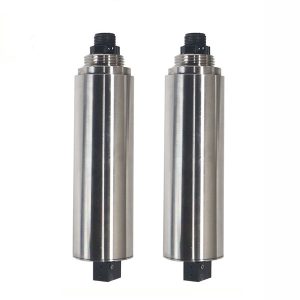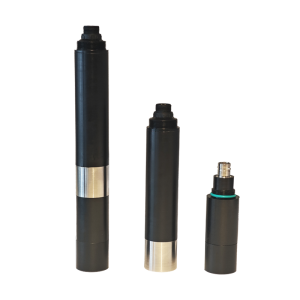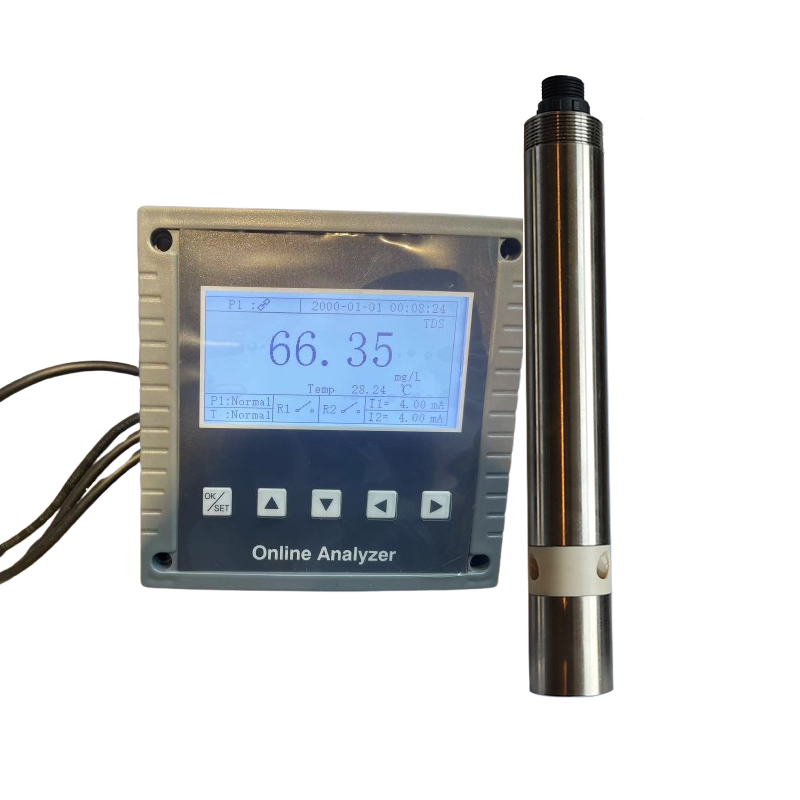
Overview:
The Inline Total Dissolved Solids (TDS) Sensor adopts a new generation of four-electrode/ six-electrode technology, with a wide measurement range, automatic switching measurement range, a built-in temperature sensor, and real-time temperature compensation. It has excellent anti-pollution ability and will not cause polarization even in a harsh environment for long-term online monitoring. An RS-485 output can be networked without a controller.
Features:
- Digital sensor, RS485 output, support Modbus;
- Wide measurement range, automatic switching measurement range.
- Built-in temperature sensor, real-time temperature compensation;
- Four-electrode/six-electrode technology, no polarization.
Technical parameter:
| Item | Parameters |
|---|---|
| Product Name | Total Dissolved Solids (TDS) Sensor |
| Model | DS285 |
| Principle | Electrode method |
| Range | 0-100g/L or 0~100000mg/L(ppm) Customizable |
| Measurement accuracy | 3% |
| Resolution | 0.1mg/L |
| Response time | <2 sec |
| Deepest depth | Underwater 30m |
| Protection level | IP68 |
| Max operatingpressure | 3 bar |
| Temperature range | 0-50°C |
| Output Signal | Support RS-485,MODBUS protoco |
| Power information | DC 6-12V, current <50mA |
| Probe cable length | Standard 5 meters, longer can be customized |
| Size | Φ22 X 152.5mm |
| Housing material | SS316+PEEK( Fresh water), Titanium+PEEK(Sea water,Salt water) |
Inline Total Dissolved Solids (TDS) Sensor Video
FAQs
- What is TDS?
TDS stands for Total Dissolved Solids, and it is used to measure the concentration of dissolved substances in a liquid, typically water. These substances include minerals, salts, and organic matter that are small enough to pass through a filter.
2. What is TDS used to measure?
TDS is used to:
Assess water quality – Higher TDS levels may indicate hard water or contamination.
Monitor drinking water purity – Safe drinking water usually has a TDS below 500 mg/L.
Evaluate the performance of water filters – Checking TDS before and after filtration.
Test aquariums, hydroponics, and pools – To maintain healthy water conditions for plants or animals.
Industrial applications – Like boiler water quality, or in food and beverage production.
3. What is a TDS sensor?
A TDS sensor is an electronic device that measures the total concentration of dissolved solids in water. It usually works by:
Measuring electrical conductivity (EC) of the water, because dissolved ions increase conductivity.
Converting the EC value into an estimated TDS value, typically reported in ppm (parts per million).
Common Types:
Handheld TDS meters – Portable and widely used for on-the-spot water testing.
Inline TDS sensors – Installed in water systems for continuous monitoring.
Note: TDS sensors give an estimate of total solids but don’t identify what the solids are (e.g., specific minerals or contaminants). For a detailed analysis, lab testing is needed.
4. What’s the difference between TDS and EC sensors?
EC sensor gives a direct reading of electrical conductivity (µS/cm or mS/cm).
TDS sensor converts EC to ppm using a multiplier.
Some devices offer dual EC/TDS readings.
5. What does a TDS sensor measure?
A TDS sensor estimates the total concentration of dissolved solids in water by measuring its electrical conductivity (EC) and converting it to parts per million (ppm).
6. What is a good TDS value for drinking water?
Ideal range: 0–300 ppm
Acceptable: Up to 500 ppm (as per WHO and EPA guidelines)
Above 500 ppm: May affect taste, and could indicate contamination or high mineral content
7. How does a TDS sensor work?
It measures electrical conductivity in water. Since dissolved salts and minerals conduct electricity, higher conductivity means higher TDS. The sensor converts this data into a TDS reading, typically using a conversion factor (~0.5–0.7, depending on the sensor and solution type).
8. What substances contribute to TDS?
-Calcium
-Magnesium
-Sodium
-Potassium
-Bicarbonates
-Chlorides
-Sulfates
-Organic matter and some metals
9. How often should I calibrate a TDS sensor?
Typically: Every 3–6 months
Or whenever readings seem inaccurate
10. Can TDS sensors be used in hot water?
Most TDS sensors are rated for room temperature to about 50°C (122°F). For higher temperatures, use a sensor rated for industrial or lab use.