The post Common Application Scenarios of OPS DSOD703 Oil Spill Detection Solutions appeared first on Water Quality Sensors.
]]>With increasingly strict environmental regulations and growing awareness of water pollution risks, oil spill detection and monitoring have become a critical requirement across multiple industries. Oil leaks—whether from ships, offshore platforms, industrial facilities, or wastewater systems—can cause severe environmental damage, operational downtime, and costly regulatory penalties if not detected early.
OPS, as a professional manufacturer of oil spill detectors and water quality monitoring sensors, provides reliable, real-time oil spill detection solutions for a wide range of industrial and environmental applications worldwide.

This article introduces the most common application scenarios of OPS Oil Spill Detectors, helping industrial buyers, engineers, and environmental project managers understand how oil spill monitoring systems are deployed in real-world conditions.
1. Maritime Shipping: Oil Spill Detection for Ships and Ports
In maritime shipping, oil pollution is most commonly caused by:
- Fuel oil or diesel leakage from vessels
- Bilge water discharge anomalies
- Accidental spills during bunkering and cargo operations
- Leaks at port facilities and terminals
Even small oil spills can spread rapidly on the water surface, threatening marine ecosystems and exposing shipowners and port operators to heavy fines and reputational risks.
OPS Solution
OPS oil spill detectors are widely used in:
- Port basins and dock areas
- Ship discharge outlets
- Bunkering and fueling zones
By continuously monitoring oil presence in water, the system can detect oil films or oil contamination in real time and trigger immediate alarms. The detectors can be integrated with:
- Port environmental monitoring systems
- Ship automation systems
- Emergency response or containment equipment
Key benefits for maritime applications:
- Continuous online monitoring
- Fast response and early warning
- Suitable for unmanned or remote operation
- Supports environmental compliance in ports and shipping operations
2. Oil and Gas Platforms: Offshore Oil Spill Monitoring
High-Risk Offshore Environments
Offshore oil and gas platforms operate under harsh conditions and face constant risks such as:
- Pipeline leakage
- Seal failure in storage and transfer systems
- Accidental spills during maintenance or operation
Due to the remote location of offshore facilities, early detection is essential to prevent large-scale marine pollution.
OPS oil spill detectors are designed for:
- Offshore platforms and FPSOs
- Near-platform water monitoring
- Pipeline route surveillance
With high-sensitivity oil detection technology, the system can identify oil leakage at an early stage, supporting proactive maintenance and environmental protection strategies.
3. Coastal and Harbour Surveillance: Protecting Sensitive Water Areas
Importance of Coastal Monitoring
- Coastal and harbour areas often combine:
- Dense shipping traffic
- Industrial activities
- Ecologically sensitive zones
Without continuous monitoring, oil contamination may go unnoticed until visible damage occurs.
OPS oil spill detection systems are commonly deployed in:
- Coastal environmental monitoring projects
- Harbour water quality surveillance
- Government and regulatory monitoring stations
The detectors support remote data transmission and long-term monitoring, making them suitable for environmental authorities and port operators seeking reliable coastal pollution detection solutions.
4. Industrial Discharge Monitoring: Preventing Oil Pollution at the Source
Industrial Oil Leakage Risks
Industrial facilities such as:
- Power plants
- Chemical factories
- Manufacturing plants
may release oil-contaminated wastewater due to equipment leakage, process failures, or accidental discharges.
Monitoring Solution
OPS oil spill detectors can be installed at:
- Industrial discharge outlets
- Internal drainage or monitoring pits
- Cooling water return systems
By detecting oil contamination before discharge, facilities can:
- Prevent environmental violations
- Protect downstream ecosystems
- Improve internal environmental compliance management
5. Emergency Spill Response: Fast Detection for Rapid Action
Time-Critical Detection
During emergency spill incidents, response speed is critical. The faster the spill location and extent are identified, the more effective the containment and recovery actions will be.
Support for Emergency Teams
OPS oil spill detectors provide:
- Rapid deployment capability
- Immediate oil spill detection and alarm
- Clear identification of contamination zones
These features help emergency response teams make data-driven decisions, minimizing environmental damage and cleanup costs.
6. Wastewater Treatment Plants: Oil Contamination Monitoring
Hidden Risks in Wastewater Treatment
Oil contamination in wastewater treatment plants may originate from:
- Industrial wastewater inflow
- Incomplete oil-water separation
- Equipment malfunction
Undetected oil can reduce treatment efficiency and damage downstream processes.
Monitoring Benefits
OPS oil spill detectors are applied to:
- Influent monitoring
- Effluent quality assurance
- Reclaimed water safety monitoring
Real-time oil detection ensures that treated water meets discharge standards and protects treatment infrastructure.
Why Choose OPS Oil Spill Detectors?
OPS oil spill detection systems are designed for industrial-grade reliability and long-term operation.
Key advantages include:
- Continuous online oil spill monitoring
- High sensitivity to oil films and oil contamination
- Suitable for harsh industrial and marine environments
- Easy integration with SCADA and monitoring platforms
- Proven performance in global environmental projects
In Conclusion, Oil spill detection is no longer optional—it is a fundamental part of modern environmental protection, industrial safety, and regulatory compliance.
With extensive application experience across maritime shipping, oil and gas, industrial discharge, coastal surveillance, emergency response, and wastewater treatment, OPS Oil Spill Detectors provide reliable and cost-effective solutions for industrial buyers and environmental monitoring projects worldwide.
If you are looking for a professional oil spill detection system manufacturer or a customized solution for your specific application, OPS is ready to support your project.
Tags: oil spill detector, oil spill detection system, oil spill monitoring system, oil in water sensor, oil leak detection sensor, maritime oil spill detection, offshore oil spill monitoring, port oil spill detector, industrial oil discharge monitoring, wastewater oil contamination monitoring, oil spill detector manufacturer, oil spill detection system supplier, industrial oil spill monitoring solution, oil in water sensor manufacturer.
Related Product
Non-contact DSOD703 Oil Spill Detector
Video
Related Blogs
OPS DSOD703 Oil Spill Monitoring & Alarm Systems Installed in Seawater Desalination Plants in the UAE
OPS DSOD703 Oil Spill Detectors Installed on Overseas Diesel Storage Project
OPS DSOD703 Oil Spill Detector Installed in Sewage Channels in Russia
OPS DSOD703 Non-Contact Oil Spill Detector Installed at Coastal Oil Depot in Hainan
To send An Enquiry Now
The post Common Application Scenarios of OPS DSOD703 Oil Spill Detection Solutions appeared first on Water Quality Sensors.
]]>The post Which Industries Can Use DSOD703 Oil Spill Detectors? appeared first on Water Quality Sensors.
]]>The DSOD703 Oil Spill Detector is designed to detect oil films on water surfaces in real time, enabling early warning and rapid response. Its versatility makes it suitable for a wide range of industries where oil and water coexist.
A simple rule applies:
Where there is oil + water + environmental or safety risk, oil spill detection is necessary.
1. Seawater Desalination & Water Treatment Industry

Typical Applications
- Seawater desalination plants (especially in the Middle East)
- Municipal water intake systems
- Wastewater treatment plants
Why It Matters?
Water treatment systems rely on clean intake water. Even small amounts of oil contamination can:
- Damage reverse osmosis (RO) membranes
- Reduce treatment efficiency
- Compromise on drinking water safety
Role of DSOD703
The DSOD703 continuously monitors water surfaces at intake points and drainage areas. When oil is detected, it triggers an alarm, allowing operators to:
- Shut down intake systems
- Prevent contamination spread
- Protect critical infrastructure
2. Ports, Harbors & Marine Shipping

Typical Applications
- Port waters
- Ship docking areas
- Bunkering (fueling) terminals
Key Risks
Ports are high-risk environments for oil spills due to:
- Ship fueling operations
- Cargo handling
- Accidental leaks from vessels
DSOD703 Benefits
- Real-time monitoring of water surfaces
- Early detection of fuel leaks
- Compliance with marine environmental regulations
Business Impact
Using oil spill detectors helps port authorities:
- Avoid fines and legal liabilities
- Maintain environmental certifications
- Improve operational safety
3. Underground Storage Tank (UST) Leak Monitoring
Typical Locations
- Gas stations (underground fuel tanks)
- Industrial diesel storage facilities
- Backup generator fuel systems (data centers, hospitals)
- Logistics hubs and ports
- Military fuel storage sites
Why This Is a Priority Application
Underground oil leaks are invisible but extremely dangerous:
- Contaminate groundwater
- Damage soil ecosystems
- Cause long-term, irreversible pollution
How DSOD703 Helps
Installed in monitoring wells, drainage systems, or nearby water collection points, the DSOD703:
- Detects oil presence early
- Prevents environmental disasters
- Supports regulatory compliance
This is one of the highest-conversion application scenarios in global markets.
4. Power & Energy Industry
Typical Facilities
- Thermal power plants
- Nuclear power plants
- Hydropower stations
- Electrical substations (oil-filled transformers)
Oil Sources
- Turbine lubricating oil
- Transformer insulating oil
- Hydraulic systems
Risks
Oil leaks can enter:
- Drainage systems
- Cooling water circuits
- Natural water bodies
DSOD703 Value
- Continuous monitoring of drainage outlets
- Early warning of equipment leaks
- Prevention of environmental contamination
Added Advantage
Power plants operate under strict environmental regulations—oil spill detection systems support compliance and reduce operational risks.
5. Oil & Gas Industry
Application Areas
- Oilfield extraction sites
- Refineries
- Storage tank farms
- Pipelines
Key Challenges
- Large volumes of hydrocarbons
- High environmental risk
- Strict regulatory requirements
DSOD703 Functions
- Detect crude oil or refined product leaks
- Monitor wastewater discharge
- Enhance safety and environmental protection
Strategic Importance
In the oil & gas sector, early detection can:
- Prevent catastrophic spills
- Reduce cleanup costs
- Protect the company’s reputation
6. Industrial Manufacturing
Industries Covered
- Chemical plants
- Steel factories
- Machinery manufacturing
- Food processing plants (oily wastewater)
Oil Sources
- Hydraulic oil
- Cutting fluids
- Lubricants
- Process wastewater
Why Monitoring Is Needed
Industrial wastewater often contains oil residues. Without monitoring:
- Environmental discharge standards may be violated
- Equipment efficiency may decline
- Regulatory penalties may occur
DSOD703 Advantages
- Real-time monitoring of effluent water
- Detection of abnormal oil discharge
- Support for environmental audits
7. Airports & Transportation Infrastructure
Application Areas
- Airport drainage systems
- Runways (fuel and de-icing fluids)
- Highway drainage systems
- Tunnel drainage
Risk Factors
- Aircraft fuel spills
- Vehicle oil leaks
- Rainwater runoff carrying contaminants
DSOD703 Role
- Monitors oil contamination in drainage networks
- Prevents pollutants from entering rivers or lakes
- Supports environmental compliance
8. Municipal & Environmental Monitoring
Typical Use Cases
- Urban stormwater systems
- Drainage outlets
- Environmental monitoring stations
Key Objective
Government agencies need to detect:
- Illegal oil discharge
- Sudden pollution incidents
- Industrial violations
DSOD703 Contribution
- Provides real-time monitoring data
- Enables rapid response
- Strengthens environmental governance
9. Emergency Response & Environmental Protection
Deployment Scenarios
- Rivers, lakes, and reservoirs
- Offshore oil spill monitoring
- High-risk environmental zones
Why It’s Critical
Oil spills can spread rapidly, causing large-scale ecological damage.
DSOD703 Benefits
- Immediate detection and alerting
- Supports emergency response
- Minimizes environmental impact
10. Special Application Scenarios
Unique Environments
- Offshore platforms
- Military bases
- Laboratory testing of water systems
- Data center cooling systems (with oil contamination risk)
Flexibility Advantage
The DSOD703 is adaptable to:
- Harsh environments
- Remote locations
- Specialized monitoring needs
Why DSOD703 Oil Spill Detectors Stand Out
Across all industries, the DSOD703 provides:
✅ Real-Time Monitoring
Continuous detection ensures no delay in identifying oil contamination.
✅ High Sensitivity
Detects even thin oil films on water surfaces.
✅ Wide Applicability
Suitable for both open water and enclosed systems.
✅ Environmental Compliance
Helps organizations meet local and international regulations.
✅ Cost Savings
Prevents expensive cleanup operations and downtime.
The DSOD703 Oil Spill Detector is not limited to a single industry—it is a universal solution for any environment where oil contamination poses a risk to water systems, safety, or regulatory compliance.
From desalination plants and ports to underground fuel tanks and industrial wastewater systems, its applications are vast and growing. As environmental standards worldwide become stricter, adopting reliable oil spill detection technology is no longer optional—it is a strategic necessity.
Call to Action
Looking to enhance your environmental monitoring system?
The DSOD703 Oil Spill Detector offers reliable, real-time protection across multiple industries.
Contact us today to learn how DSOD703 can be customized for your specific application scenario.
Tags: oil spill detector, DSOD703, oil leak detection, water oil monitoring, underground storage tank monitoring, desalination plant oil detection, environmental monitoring sensor, oil monitoring in desalination plants, water intake oil detection systems, underground storage tank leak detection, diesel tank monitoring system, fuel leak environmental monitoring, suppliers, manufacturers, factory, company, China, wholesale, buy, price, quotation, bulk, for sale, companies, stock, cost.
Related Product
Non-contact DSOD703 Oil Spill Detector
Video
Related Blogs
OPS DSOD703 Oil Spill Monitoring & Alarm Systems Installed in Seawater Desalination Plants in the UAE
OPS DSOD703 Oil Spill Detectors Installed on Overseas Diesel Storage Project
OPS DSOD703 Oil Spill Detector Installed in Sewage Channels in Russia
OPS DSOD703 Non-Contact Oil Spill Detector Installed at Coastal Oil Depot in Hainan
To send An Enquiry Now
The post Which Industries Can Use DSOD703 Oil Spill Detectors? appeared first on Water Quality Sensors.
]]>The post OPS DSOD703 Oil Spill Monitoring & Alarm Systems Installed in Seawater Desalination Plants in the UAE appeared first on Water Quality Sensors.
]]>The United Arab Emirates is home to some of the world’s largest and most advanced seawater desalination plants. These facilities are essential for supplying potable water in arid regions where freshwater resources are scarce. However, operating in coastal and industrial environments presents unique environmental challenges—one of the most critical being oil contamination.
Even minor oil leaks from nearby industrial operations, shipping activities, or internal mechanical systems can severely impact desalination processes. Oil films on the water surface can damage intake systems, clog filtration units, and degrade membrane performance, leading to costly downtime and maintenance.
To address these risks, a large-scale desalination facility in the UAE implemented the OPS DSOD703 Oil Spill Monitoring and Alarm System—an advanced solution designed for real-time oil detection in marine and industrial water environments.
Project Background: Challenges in Seawater Intake Monitoring
Seawater desalination plants continuously draw massive volumes of water from the ocean. This intake process makes them particularly vulnerable to external contamination sources, including:
- Oil leaks from marine vessels and port activities
- Industrial discharge from nearby coastal facilities
- Accidental spills during maintenance operations
- Lubrication oil leakage from pumps and rotating equipment
- Diesel or fuel oil contamination from backup generators
In such environments, traditional inspection methods—such as manual sampling or visual observation—are insufficient. Oil films can spread rapidly across the water surface, and delayed detection can result in contamination entering the plant’s intake system.
Therefore, the facility required a continuous, automated, and highly sensitive oil monitoring solution capable of detecting even thin hydrocarbon films in real time.
Solution: DSOD703 Oil Spill Detector Deployment
To enhance monitoring capabilities, the plant deployed 5 sets of DSOD703 oil spill detectors at strategically selected locations, including:
- Seawater intake channels
- Drainage outlets near mechanical equipment
- Pumping stations and generator areas
- Maintenance zones with high oil exposure risk
The DSOD703 is specifically designed to detect oil films on water surfaces using advanced sensing technology. It continuously scans the water surface and identifies the presence of hydrocarbons with high sensitivity and reliability.
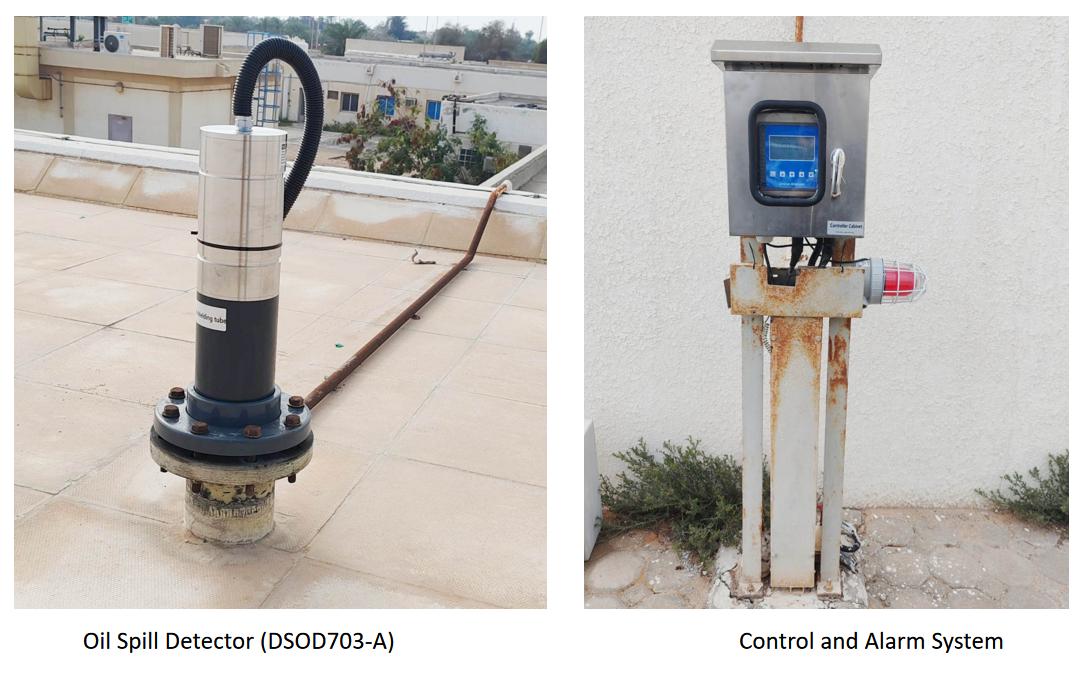
Key Features of DSOD703:
- Real-time oil film detection
- High sensitivity to thin hydrocarbon layers
- Non-contact measurement technology
- Stable performance in harsh marine environments
- Low maintenance requirements
- Easy integration with SCADA and control systems
This deployment ensures that all high-risk areas are under constant surveillance, significantly reducing the likelihood of undetected oil contamination.
How the System Works: Real-Time Monitoring and Instant Alerts
The DSOD703 system operates continuously, providing 24/7 monitoring of the water surface. Once an oil film is detected, the system immediately triggers an alarm signal.
Alarm and Response Workflow
- Detection – The sensor identifies oil presence on the water surface
- Signal Transmission – An alarm signal is sent to the plant control system
- Operator Notification – Control room operators receive instant alerts
- Rapid Response – Immediate actions are initiated, including:
- Isolating affected areas
- Stopping intake pumps if necessary
- Deploying containment measures
- Investigating the source of contamination
This rapid response capability is critical in preventing oil from entering sensitive desalination processes.
Benefits: Enhancing Safety, Efficiency, and Compliance
Since the installation of the DSOD703 system, the desalination plant has experienced significant improvements in several key areas:
1. Early Detection and Risk Prevention
The ability to detect oil contamination at an early stage allows operators to take preventive measures before the issue escalates.
2. Protection of Critical Equipment
By preventing oil from entering the intake system, the plant protects essential components such as:
- Intake pumps
- Filtration systems
- Reverse osmosis membranes
This reduces maintenance costs and extends equipment lifespan.
3. Continuous Environmental Monitoring
The system provides uninterrupted monitoring, ensuring that no contamination event goes unnoticed—even during off-hours.
4. Improved Operational Efficiency
Automated monitoring reduces reliance on manual inspection, allowing staff to focus on higher-value tasks.
5. Regulatory Compliance
Coastal industrial facilities in the UAE are subject to strict environmental regulations. The DSOD703 system helps ensure compliance by providing reliable monitoring and documented alarm records.
Environmental Impact: Protecting Marine Ecosystems
Beyond operational benefits, the DSOD703 system plays a crucial role in environmental protection.
Oil contamination in coastal waters can have severe consequences, including:
- Harm to marine life
- Damage to coral reefs and coastal ecosystems
- Long-term water quality degradation
By detecting oil spills early, the system helps prevent pollutants from spreading into the surrounding marine environment, supporting sustainability and environmental stewardship initiatives.
Why DSOD703 is Ideal for Desalination Plants
Desalination facilities operate under challenging conditions, including high salinity, humidity, and exposure to harsh weather. The DSOD703 is engineered to perform reliably in such environments.
Advantages for Desalination Applications
- High corrosion resistance
- Stable performance in saline water conditions
- Minimal calibration requirements
- Long-term operational stability
- Adaptability to various installation scenarios
These features make it a preferred choice for desalination plants and other marine industrial applications.
Real-World Results from the UAE Project
Following the deployment of the DSOD703 system, the UAE desalination plant achieved:
- Enhanced visibility over oil contamination risks
- Faster incident response times
- Reduced risk of operational disruptions
- Improved environmental compliance
- Greater confidence in intake water quality
Operators reported a significant shift from reactive to proactive management, enabling better control over potential contamination events.
Conclusion: A Reliable Solution for Oil Spill Monitoring
The successful implementation of the DSOD703 Oil Spill Monitoring and Alarm System in a UAE seawater desalination plant highlights its effectiveness in protecting both industrial operations and the environment.
By providing real-time monitoring, instant alerts, and reliable performance in harsh marine conditions, the DSOD703 has proven to be a critical component in modern desalination infrastructure.
As desalination continues to play a vital role in global water supply—especially in regions like the Middle East—advanced monitoring solutions like the DSOD703 will become increasingly essential.
Call to Action
If you are operating a desalination plant, industrial facility, or marine project and need a reliable oil spill monitoring solution, the OPS DSOD703 is your trusted partner for:
- Early oil detection
- Environmental protection
- Operational safety
Contact OPS today to learn how DSOD703 can safeguard your water systems and ensure compliance with environmental standards.
Tags: oil spill detector, DSOD703, seawater desalination plant UAE, oil spill monitoring system, water intake oil detection, desalination environmental protection, oil contamination alarm system, marine oil detection sensor, Oil Spill Monitoring & Alarm Systems, oil spill detector suppliers, oil spill detector manufacturers, factory, company, China, wholesale, buy, price, quotation, bulk, for sale, companies, stock, cost.
Related Product
Non-contact DSOD703 Oil Spill Detector
Videos
Related Blogs
5 Sets of OPS DSOD703 Oil Spill Detectors Shipped to the Middle East for Seawater Desalination Project
OPS DSOD703 Oil Spill Detectors Installed on Overseas Diesel Storage Project
OPS DSOD703 Oil Spill Detector Installed in Sewage Channels in Russia
OPS DSOD703 Non-Contact Oil Spill Detector Installed at Coastal Oil Depot in Hainan
To send An Enquiry Now
The post OPS DSOD703 Oil Spill Monitoring & Alarm Systems Installed in Seawater Desalination Plants in the UAE appeared first on Water Quality Sensors.
]]>The post OPS DSOD703 Oil Spill Detectors Installed on Overseas Diesel Storage Project appeared first on Water Quality Sensors.
]]>Strengthening Diesel Leak Monitoring and Environmental Protection
Diesel storage facilities play a critical role in industries such as power generation, transportation, mining, and manufacturing. However, the storage and handling of diesel fuel also bring potential environmental risks. Even small leaks from underground or above-ground diesel storage tanks can gradually migrate through soil or drainage systems, eventually contaminating groundwater, sewage networks, or nearby surface water bodies.

To address these challenges, an overseas industrial client recently deployed OPS DSOD703 Oil Spill Detectors as part of a comprehensive diesel leak monitoring system for its storage infrastructure. The project demonstrates how advanced oil detection technology can provide early warning of hydrocarbon contamination, helping facilities reduce environmental risks, improve operational safety, and comply with environmental regulations.
Project Background: Diesel Storage Leak Risks
The project site includes several diesel storage tanks that supply fuel for industrial operations. Diesel fuel, although less volatile than gasoline, can still pose significant environmental hazards when leaked into soil, drainage systems, or water channels.
Common risks associated with diesel storage facilities include:
- Undetected micro-leaks from pipelines or tank connections
- Fuel spills during loading and unloading operations
- Contamination entering drainage channels or monitoring wells
- Long-term soil and groundwater pollution
- High environmental remediation costs if leaks are discovered too late
Because diesel fuel contains hydrocarbons that float on water, leaks often migrate through drainage systems and inspection wells before being detected by traditional monitoring methods.
To mitigate these risks, the facility required a real-time oil spill detection solution capable of monitoring potential contamination in drainage channels and inspection wells connected to the diesel storage area.
Why the DSOD703 Oil Spill Detector Was Selected
After evaluating several technologies, the engineering team selected the OPS DSOD703 Oil Spill Detector due to its high sensitivity, reliable detection method, and suitability for harsh industrial environments.

The DSOD703 uses fluorescence-based oil detection technology, which is widely recognized for its accuracy in detecting petroleum hydrocarbons in water. When oil is present on the water surface, it emits fluorescence under specific wavelengths of light. The DSOD703 sensor captures this fluorescence signal and converts it into an alarm or monitoring output.
Key Advantages of DSOD703
- High-sensitivity detection of petroleum hydrocarbons
- Real-time monitoring of oil contamination in water
- Rapid response to oil film formation
- Suitable for industrial drainage systems and inspection wells
- Minimal maintenance requirements
- Stable performance in harsh environments
This technology makes the DSOD703 particularly effective for detecting diesel, lubricating oils, and other hydrocarbon fuels that may leak into water systems.
Installation Layout in the Diesel Storage Monitoring System
To provide comprehensive monitoring coverage, the DSOD703 oil spill detectors were strategically installed at several critical locations around the diesel storage facility.
1. Inspection Wells Near Underground Tanks
Some DSOD703 sensors were installed above inspection wells connected to underground diesel storage tanks. These wells serve as monitoring points where potential fuel leaks may accumulate before spreading further into the environment.
If diesel leaks from pipelines or tanks and migrates through the containment system, it may enter these wells. The DSOD703 detector can immediately identify the presence of hydrocarbons on the water surface and trigger an alarm.
2. Drainage Channels in the Containment Area
Additional detectors were installed above drainage channels within the tank containment zone. These drainage systems collect rainwater and potential spills from the surrounding area.
By monitoring these channels, the DSOD703 can detect oil contamination before it leaves the containment area and enters municipal drainage networks or natural waterways.
3. Monitoring Points Near Pumping Stations
In some areas, diesel is transferred through pumping stations and pipelines. Sensors were installed near these transfer points to monitor possible spills during fuel handling operations.
This setup ensures that even small operational spills are quickly detected and addressed.
System Integration and Monitoring
The DSOD703 detectors were integrated into the facility’s central environmental monitoring system.
When oil is detected, the system can:
- Trigger real-time alarms
- Send alerts to the control room
- Activate automated safety procedures
- Notify maintenance teams for immediate inspection
This integration ensures rapid response and reduces the time between leak occurrence and corrective action.
Results and Benefits of the Project
Since the installation of the DSOD703 oil spill detectors, the diesel storage facility has significantly improved its environmental monitoring capabilities.
1. Early Detection of Oil Contamination
The DSOD703 provides continuous monitoring of water surfaces within the facility’s drainage and inspection systems. This enables operators to detect oil contamination at a very early stage.
2. Reduced Environmental Risk
By identifying leaks quickly, the system helps prevent diesel from reaching soil layers, groundwater, or nearby water bodies.
3. Improved Environmental Compliance
Many environmental regulations require facilities storing fuels to implement leak detection and monitoring systems. The DSOD703 solution helps the facility meet these regulatory requirements.
4. Lower Cleanup and Remediation Costs
Early detection significantly reduces the scale of potential contamination events, minimizing cleanup costs and operational disruptions.
5. Enhanced Operational Safety
Real-time oil spill monitoring helps facility operators respond rapidly to fuel leaks or spills, improving overall site safety.
Typical Applications of DSOD703 Oil Spill Detector
The successful deployment of the DSOD703 in this overseas diesel storage project highlights its versatility in many industries.
Typical applications include:
- Diesel storage tank monitoring
- Fuel depot spill detection
- Industrial drainage oil monitoring
- Airport fuel storage systems
- Power plant fuel storage areas
- Petrochemical facilities
- Wastewater treatment plants
- Marine ports and shipyards
Because the sensor can detect oil film on water surfaces, it is especially suitable for drainage channels, monitoring wells, and containment systems.
In Conclusion, Diesel fuel storage facilities must maintain strict environmental monitoring to prevent hydrocarbon contamination and comply with regulatory standards. Traditional inspection methods often fail to detect small leaks before they escalate into major environmental incidents.
The successful implementation of the OPS DSOD703 Oil Spill Detector in this overseas diesel storage project demonstrates how advanced fluorescence detection technology can provide reliable, real-time monitoring of oil contamination.
By installing DSOD703 detectors at key monitoring points such as inspection wells, drainage channels, and transfer stations, the facility has significantly strengthened its diesel leak detection capabilities and improved environmental protection.
As industries around the world continue to prioritize environmental safety and regulatory compliance, oil spill detection technologies like the DSOD703 will play an increasingly important role in modern fuel storage management systems.
Tags: oil spill detector, diesel leak detection, oil in water sensor, oil spill monitoring system, diesel storage tank monitoring, fluorescence oil detector, industrial oil leak detection, drainage oil monitoring, hydrocarbon detection sensor, OPS DSOD703 oil spill detector, oil spill detection for diesel storage, oil film detection sensor, Suppliers, manufacturers, factory, wholesale, buy, price, quotation, bulk, for sale, companies, stock, cost.
Related Product
Non-contact DSOD703 Oil Spill Detector
Video
Related Blogs
OPS Ships 9 Sets of DSOD703 Oil Spill Detectors for Overseas Diesel Storage Tank Leakage Monitoring
OPS DSOD703 Oil Spill Detector Installed in Sewage Channels in Russia
OPS DSOD703 Non-Contact Oil Spill Detector Installed at Coastal Oil Depot in Hainan
To send An Enquiry Now
The post OPS DSOD703 Oil Spill Detectors Installed on Overseas Diesel Storage Project appeared first on Water Quality Sensors.
]]>The post OPS Ships 9 Sets of DSOD703 Oil Spill Detectors for Overseas Diesel Storage Tank Leakage Monitoring appeared first on Water Quality Sensors.
]]>
This shipment reflects the growing demand for automated oil spill detection solutions that enable real-time monitoring, rapid alarm response, and effective environmental risk mitigation.
Challenges in Diesel Storage Tank Leakage Detection
Diesel storage systems—including above-ground tanks, underground tanks, and bunded areas—face persistent risks of leakage caused by corrosion, aging infrastructure, valve failure, or operational errors. In many cases, diesel leaks are not immediately visible, especially when mixed with rainwater or accumulated in drainage pits.
Without continuous monitoring, even small diesel leaks can lead to:
- Soil and groundwater contamination
- Fire and explosion hazards
- Regulatory non-compliance and environmental penalties
- Increased maintenance and remediation costs
As a result, industrial operators are increasingly shifting from manual inspection to continuous online oil spill detection systems.
DSOD703 Oil Spill Detector: Designed for Oil Spill Monitoring
The DSOD703 Oil Spill Detector is a proven solution developed by OPS for industrial oil leakage detection applications, particularly for diesel, fuel oil, and other petroleum products.
Key technical advantages include:
- High-Sensitivity Oil-on-Water Detection
The DSOD703 accurately distinguishes diesel oil from water and detects oil films at an early stage, ensuring rapid alarm activation before leaks escalate.
- Real-Time Monitoring and Alarm Output
The detector supports industrial signal outputs, enabling seamless integration with PLC, DCS, and SCADA systems for centralized monitoring and automated alarm management.
- Industrial-Grade Construction
Built with corrosion-resistant materials, the DSOD703 is suitable for harsh environments such as tank farms, oily drainage systems, and high-humidity industrial zones.
- Low Maintenance and Long-Term Stability
With a robust sensing structure and minimal maintenance requirements, the detector is ideal for long-term deployment in overseas or unmanned facilities.
Typical Application Scenarios
In this overseas project, the DSOD703 Oil Spill Detectors are installed at key monitoring points, including:
- Diesel storage tank bunds and containment areas
- Oily water drainage pits and sumps
- Emergency discharge and rainwater collection systems
By providing continuous oil leakage monitoring, the system enables early warning and rapid response, significantly reducing environmental impact and safety risks.
OPS: Trusted Manufacturer of Oil Spill Detection Solutions
As a professional manufacturer specializing in oil spill detection sensors and environmental monitoring technologies, OPS delivers not only reliable products but also complete oil leakage monitoring solutions tailored to project-specific requirements.
From sensor selection to system integration support, our solutions are widely applied in diesel storage facilities, petrochemical plants, power stations, ports, and industrial parks worldwide. The successful shipment of DSOD703 Oil Spill Detectors further demonstrates our commitment to supporting global customers with dependable and compliant oil spill monitoring technologies.
Tags: Oil Spill Detector, Diesel Storage Tank Leakage Monitoring, Oil Leak Detection Sensor, Oil Spill Detection System, Diesel leak detection system, Oil spill detector for storage tanks, Industrial oil spill monitoring, Oil in water detector, Fuel oil leakage detection, Online oil spill monitoring sensor, SCADA oil spill detection, Suppliers, manufacturers, factory, wholesale, buy, price, quotation, bulk, for sale, companies, stock, cost.
Video
Related Product
Non-contact DSOD703 Oil Spill Detector
Related Blog
5 Sets of OPS DSOD703 Oil Spill Detectors Shipped to the Middle East for Seawater Desalination Project
OPS DSOD703 Oil Spill Detector Installed in Sewage Channels in Russia
OPS DSOD703 Non-Contact Oil Spill Detector Installed at Coastal Oil Depot in Hainan
To send An Enquiry Now
The post OPS Ships 9 Sets of DSOD703 Oil Spill Detectors for Overseas Diesel Storage Tank Leakage Monitoring appeared first on Water Quality Sensors.
]]>The post Spectrophotometer vs Sensor: How OPS Helps Industrial Users Choose the Right Water Quality Monitoring Technology appeared first on Water Quality Sensors.
]]>At OPS, we work closely with system integrators, shipyards, wastewater operators, and OEM partners worldwide. One of the most common technical questions we receive is:
Should we use a spectrophotometer or a sensor for this application?
This article explains the key differences from a manufacturer’s perspective:
Two Technologies, Two Different Rol
Spectrophotometer: Reference-Grade Chemical Analysis
A spectrophotometer determines water quality parameters by measuring light absorption at specific wavelengths, following the Beer–Lambert law. In most cases, this involves chemical reagents and controlled reaction conditions.
Spectrophotometric methods are commonly used for:
- COD
- Ammonia nitrogen
- Total phosphorus
- Total nitrogen
- Certain heavy metals
From OPS’s engineering experience, spectrophotometers are best suited for laboratory analysis, compliance verification, and reference measurements, where accuracy and repeatability are the primary requirements.
Sensor: Continuous Online Monitoring
A sensor, by contrast, is designed for direct, in-situ measurement. Sensors convert physical, chemical, or optical responses into electrical signals, allowing continuous monitoring without the need for sample handling or reagents.
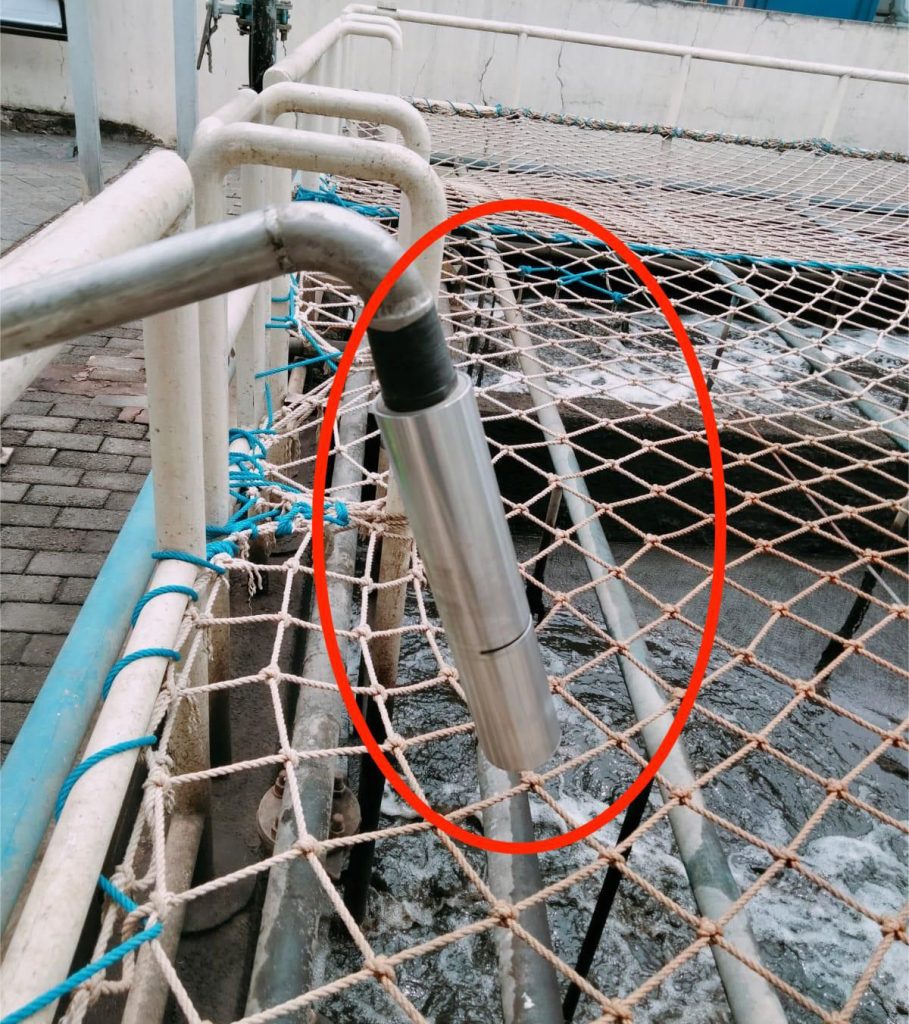
OPS’s sensor portfolio supports parameters such as:
- pH, ORP
- Dissolved oxygen (DO)
- Conductivity
- Turbidity
- Ammonium and nitrate
- Oil-in-water
- Chlorophyll and algae indicators
- PAH
- Turbidity
- COD
- BOD
- TSS
- TOC
These sensors are built for 24/7 operation in harsh environments, including wastewater plants, marine systems, and industrial discharge points.
Engineering Comparison: What Matters in Real Projects
| Criteria | Spectrophotometer | Sensor |
|---|---|---|
| Measurement mode | Discrete, sample-based | Continuous, real-time |
| Automation | Limited | High |
| Reagents | Required | Typically reagent-free |
| Maintenance frequency | High | Low to medium |
| Integration | Laboratory systems | PLC / SCADA / DCS |
| Typical location | Lab / shelter | In-pipe / in-tank / open water |
From a system design standpoint, the availability of data and system uptime often outweigh marginal gains in analytical precision.
Accuracy vs Process Control
Spectrophotometers provide high analytical accuracy under controlled conditions and are often referenced in regulatory standards. However, they are not designed to respond instantly to process fluctuations.
Sensors, while optimized for field robustness rather than laboratory precision, offer:
- Instant response
- Continuous trend tracking
- Alarm triggering
- Real-time control feedback
For applications such as wastewater treatment optimization, EGCS discharge monitoring, or industrial effluent control, real-time data is essential for operational decision-making.
Total Cost of Ownership (TCO)
From a lifecycle perspective, the cost structure differs significantly:
Spectrophotometer Systems
- Reagent consumption
- Manual sample handling
- Higher maintenance workload
- Chemical waste disposal
Sensor-Based Systems
- One-time hardware investment
- Periodic calibration
- Optional automatic cleaning systems
- Minimal consumables
OPS designs its online sensors with anti-fouling materials, digital signal processing, and optional automatic cleaning, significantly reducing long-term operational costs.
Integration with Industrial Automation
Modern water monitoring systems require seamless integration. OPS sensors are designed with industrial compatibility in mind, supporting:
- RS485 / MODBUS RTU
- 4–20 mA outputs
- SCADA and PLC systems
- Remote monitoring platforms
This makes sensor-based solutions ideal for unmanned stations, marine installations, and remote monitoring sites.
Typical Application Scenarios
Spectrophotometer-Oriented Use Cases
- Laboratory compliance testing
- Reference measurements
- Regulatory reporting
- Method validation
Sensor-Oriented Use Cases
- Wastewater treatment plants
- Industrial discharge monitoring
- Marine and offshore monitoring
- EGCS and scrubber systems
- Environmental monitoring networks
OPS’s Recommended Approach
In many large-scale projects, OPS recommends a combined monitoring strategy:
- Online sensors for continuous monitoring, alarms, and process control
- Spectrophotometric analysis for periodic verification and regulatory reporting
This hybrid architecture balances operational efficiency, data reliability, and compliance requirements, and has been successfully deployed in municipal, industrial, and marine applications worldwide.
Technology Should Match the Application
At OPS, we believe that no single technology fits all scenarios.
- Spectrophotometers provide analytical certainty.
- Sensors provide operational intelligence.
Understanding the difference allows system designers and operators to build monitoring solutions that are accurate, reliable, and economically sustainable.
Our role as a manufacturer is not just to supply instruments, but to help customers select the right technology for the right application.
Tags: spectrophotometer vs sensor, water quality monitoring sensor, online water quality sensor, industrial water quality monitoring, wastewater monitoring sensors, EGCS water quality monitoring, oil in water sensor, multiparameter water quality probe, online water quality analyzer, OPS water sensors, Suppliers, manufacturers, factory, wholesale, buy, price, quotation, bulk, for sale, companies, stock, cost.
Related Product
https://opticaldosensor.com/product-center
Related Video
To send An Enquiry Now
The post Spectrophotometer vs Sensor: How OPS Helps Industrial Users Choose the Right Water Quality Monitoring Technology appeared first on Water Quality Sensors.
]]>The post Engineer’s Guide: What Is a Multiparameter Water Quality Sensor and Why Is It Widely Used Today? appeared first on Water Quality Sensors.
]]>So what exactly does a multiparameter water quality sensor do? How is it different from traditional water quality instruments? From an engineer’s practical perspective, this article provides a clear and technical explanation.
What Is a Multiparameter Water Quality Sensor?

A multiparameter water quality sensor is an integrated online water quality monitoring device capable of measuring multiple water quality parameters simultaneously within a single system.
Traditionally, parameters such as pH, dissolved oxygen, turbidity, and conductivity were measured using separate instruments. This approach increases installation complexity and maintenance workload. A multiparameter sensor consolidates these measurements into one compact unit, enabling continuous, real-time monitoring—ideal for long-term deployment.
Common measurable parameters include:
pH, dissolved oxygen (DO), conductivity, turbidity, ORP, temperature, ammonia nitrogen, chlorophyll, and oil in water.
Why Do Engineering Projects Prefer Online Multiparameter Water Quality Sensors?
Based on field experience, there are three main reasons:
1. Simpler Installation and Higher System Reliability
Monitoring sites such as wastewater plants, rivers, and industrial facilities often have limited space and harsh conditions. Using a single multiparameter water quality monitoring system reduces wiring, mounting points, and failure risks, resulting in a more stable system.
2. Designed for Long-Term, Unattended Operation
Many monitoring locations—such as river cross-sections, intake points, and buoy stations—cannot be serviced frequently. Industrial-grade multiparameter water quality sensors typically feature stainless steel housings, digital communication, and automatic cleaning systems, making them suitable for long-term underwater operation with minimal maintenance.
3. Continuous Data for Compliance and Trend Analysis
The core value of online water quality monitoring lies in data continuity. Multiparameter sensors provide 24/7 real-time data, supporting environmental compliance, process optimization, trend analysis, and early warning systems.
Why Is Automatic Cleaning So Important in Online Water Quality Monitoring?
In real-world applications, biofouling and surface contamination are the primary causes of measurement drift.
This is why many projects specify automatic cleaning water quality sensors. Integrated cleaning brushes or mechanisms periodically remove biofilm, sediment, and air bubbles, helping to reduce:
- Biological fouling
- Suspended solids buildup
- Measurement errors caused by air bubbles
For rivers, wastewater, and industrial effluent, automatic cleaning is no longer optional—it is a key requirement.
How Do Multiparameter Water Quality Sensors Integrate with Monitoring Systems?
Most modern multiparameter water quality sensors use RS485 communication with MODBUS protocol, which allows seamless integration with:
- PLC systems
- SCADA platforms
- Data loggers
- Environmental monitoring networks
This digital architecture provides strong noise immunity, long transmission distance, and high compatibility with industrial control systems.
Typical Application Scenarios for Multiparameter Water Quality Monitoring
From an engineering standpoint, the most common applications include:
- River, lake, and reservoir water quality monitoring
- Wastewater treatment plant influent and effluent monitoring
- Industrial wastewater discharge monitoring
- Municipal drinking water and secondary supply systems
- Aquaculture and fish farming water quality management
- Buoy-based and unmanned monitoring platforms
These applications share common characteristics: long deployment cycles, limited access for maintenance, and high reliability requirements—making integrated multiparameter sensors the preferred solution.
What Do Engineers Focus on When Selecting a Multiparameter Water Quality Sensor?
In practice, engineers prioritize the following factors over price alone:
- True multiparameter integration
- Availability of automatic cleaning
- Standard communication protocols (RS485 / MODBUS)
- Suitability for long-term underwater operation
- Ease of probe replacement and plug-and-play calibration
- Proven field performance and project references
These criteria directly impact long-term stability and total cost of ownership.
Conclusion: Why Multiparameter Water Quality Sensors Are the Industry Standard
From an industry trend perspective, multiparameter water quality sensors have become the mainstream solution for online water quality monitoring. As regulatory requirements tighten and unmanned monitoring becomes more common, integrated, digital, and low-maintenance monitoring systems will continue to dominate future projects.
For engineers involved in water quality monitoring system design, equipment selection, or environmental compliance, understanding how multiparameter sensors work—and where they perform best—is essential for making informed decisions.
Tags: multiparameter water quality sensor, online water quality monitoring, water quality sonde, industrial water quality sensor, automatic cleaning water quality sensor, water quality monitoring system, RS485 MODBUS water quality sensor, Suppliers, manufacturers, factory, wholesale, buy, price, quotation, bulk, for sale, companies, stock, cost.
Related Product
Online Multi-parameter Water Quality Sensor
Related Video
To send An Enquiry Now
The post Engineer’s Guide: What Is a Multiparameter Water Quality Sensor and Why Is It Widely Used Today? appeared first on Water Quality Sensors.
]]>The post OPS Ships 7 Sets of PAH, pH and Turbidity Sensors to South Korea for Marine EGCS Systems appeared first on Water Quality Sensors.
]]>OPS, a professional manufacturer of marine and industrial water quality sensors, has announced the successful shipment of 7 sets of PAH (Polycyclic Aromatic Hydrocarbon), pH, and Turbidity sensors to South Korea. The sensors will be deployed in Marine Exhaust Gas Cleaning Systems (EGCS) to support continuous washwater monitoring and ensure compliance with IMO EGCS discharge regulations.

The shipment marks another milestone in OPS’s expanding footprint in the global marine scrubber and environmental compliance market, particularly within Asia’s leading hub for shipbuilding and marine equipment.
Designed for IMO-Compliant EGCS Wash Water Monitoring
With the enforcement of the IMO 2020 sulfur cap and the MEPC EGCS Wash Water Guidelines, ship operators are required to continuously monitor scrubber wash water to prevent secondary marine pollution. Among all monitoring parameters, PAH, pH, and turbidity are regarded as the most critical indicators of EGCS discharge performance.
- PAH monitoring ensures that harmful unburned hydrocarbons remain within allowable discharge limits
- pH measurement verifies proper neutralization of acidic scrubber wash water
- Turbidity monitoring helps assess suspended solids and overall discharge quality
The sensors supplied by OPS are engineered to deliver stable, accurate, and real-time measurements under harsh marine operating conditions.
Sensor Features Optimized for Marine Scrubber Environments
The EGCS sensor sets shipped to South Korea are industrial-grade solutions purpose-built for shipboard scrubber systems, offering several technical advantages:
- Compliance with IMO MEPC EGCS monitoring requirements
- Optical PAH sensor technology with fast response and low long-term drift
- High-reliability pH sensors with advanced temperature compensation and anti-fouling performance
- Robust turbidity sensors resistant to air bubbles, vibration, and particulate interference
- RS485 / Modbus communication, enabling seamless integration with EGCS control panels and data recorders
Each sensor undergoes factory calibration and functional testing before shipment to ensure reliable performance during long-term onboard operation.
Supporting South Korea’s Marine and Shipbuilding Industry
South Korea remains one of the world’s most important centers for shipbuilding, retrofitting, and marine system integration, where EGCS solutions are subject to strict technical and regulatory standards. The successful delivery of these sensors highlights OPS’s ability to meet international compliance, quality, and delivery expectations for demanding marine applications.
Commitment to Global Marine Environmental Compliance
OPS continues to focus on EGCS wash water monitoring, marine water quality sensors, and environmental compliance technologies. By providing reliable and IMO-compliant sensor solutions, the company supports shipowners, scrubber system integrators, and shipyards worldwide in meeting evolving environmental regulations and advancing sustainable maritime operations.
Tags: EGCS wash water monitoring, Marine EGCS sensors, PAH sensor for ship scrubbers, pH and turbidity sensors for EGCS, IMO EGCS compliance monitoring, Ship scrubber environmental monitoring, Marine exhaust gas cleaning system sensors, EGCS sensor supplier, OPS marine sensors.
Video
Related Products
DS810 PAH Sensor Analyzer for Marine Scrubbers (EGCS) Wash Water Monitoring System
DS510 Online pH Sensor Probe and Portable pH Meter for Water Quality Monitoring
Online Turbidity Sensor
To send An Enquiry Now
The post OPS Ships 7 Sets of PAH, pH and Turbidity Sensors to South Korea for Marine EGCS Systems appeared first on Water Quality Sensors.
]]>The post Introducing the OPS Oil Spill Detection and Monitoring System appeared first on Water Quality Sensors.
]]>Oil spills pose an ongoing environmental, economic, and operational risk for any industry that handles petroleum-based substances. Even a thin sheen of oil can have significant consequences—damaging ecosystems, polluting water sources, harming aquatic life, and triggering costly fines and cleanup operations. In environments such as coastal depots, petrochemical plants, offshore platforms, ports, and wastewater treatment sites, early detection is essential.
Traditional inspection methods—manual sampling, visual checks, or contact probes—often fail to provide reliable and continuous monitoring. These approaches are time-consuming, subject to human error, and too slow to catch spills during their earliest stages. In contrast, modern industries require automated, precise, real-time detection systems that ensure safety, compliance, and immediate intervention.

The OPS Oil Spill Detection and Monitoring System was developed to address this critical need. Designed for continuous 24/7 monitoring, it enables operators to identify oil film formation instantly, reducing environmental impact and improving emergency response capabilities.
Features and Advantages of the OPS Oil Spill Detection and Monitoring System
At the core of OPS’s solution is the DSOD703 Non-Contact Oil Spill Detector, which utilizes UV-fluorescence technology to detect oil films with extreme sensitivity and reliability.
Key Features & Benefits
1. UV Fluorescence Detection Technology
Using a 365 nm UV light source, the DSOD703 detects the natural fluorescence emitted by petroleum oils. The emitted light is captured and analyzed, enabling highly accurate detection even in challenging lighting conditions.
2. Ultra-High Sensitivity (Down to 1 µm Oil Film)
The system detects oil films as thin as 1 micron, allowing operators to respond before a spill escalates. Early detection reduces cleanup costs and prevents environmental damage.
3. Non-Contact Design for Maintenance-Free Operation
The sensor is installed above the water surface, preventing corrosion, biofouling, and mechanical wear. This non-contact design guarantees long-term stability with minimal upkeep.
4. Long Detection Range (0–10 meters)
With adjustable monitoring distances up to 10 meters, DSOD703 accommodates various installation scenarios—from docks and reservoirs to drainage channels and offshore platforms.
5. Fast Response Time (<10 seconds)
Real-time monitoring ensures immediate alerts for oil film formation, enabling rapid intervention.
6. Robust Construction and IP68 Protection
Available in SS316, titanium, or corrosion-resistant engineering plastics, the DSOD703 withstands harsh marine and industrial environments with IP68 waterproof protection.
7. Integration-Friendly Interfaces
With RS485 (Modbus RTU) and optional 4–20 mA output, the system integrates seamlessly into SCADA, DCS, and environmental monitoring platforms.
8. Anti-Interference Algorithms
Advanced spectral processing eliminates false alarms caused by algae, debris, or organic materials—ensuring reliable results in all weather and water conditions.
Case Studies of the OPS Oil Spill Detection and Monitoring System
Case Study 1: Coastal Oil Depot in Hainan
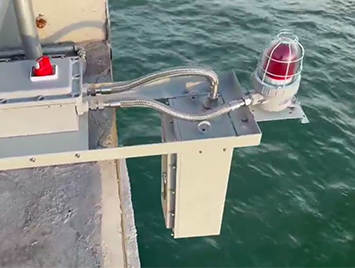
A major coastal oil storage facility in Hainan implemented the DSOD703 to strengthen its environmental safety measures. Positioned above the water near loading zones, the system provides continuous real-time monitoring. Operators now receive instant alerts at the earliest signs of oil leakage, enabling containment before the spill spreads. The depot reports a significant improvement in operational environmental compliance and risk reduction.
Case Study 2: Installation in Sewage Channels, Russia
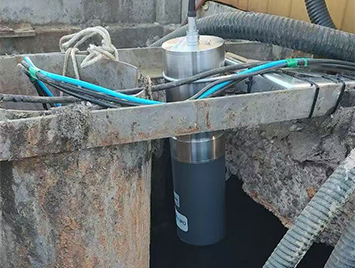
In an industrial wastewater system in Russia, the OPS DSOD703 oil spill detector was deployed above sewage channels to address long-standing risks of hydrocarbon contamination. This project demonstrates that the DSOD703 is not limited to open-water environments—it is equally effective in wastewater channels, drainage conduits, and industrial effluent pathways. This Russian deployment greatly enhanced operational visibility for wastewater treatment personnel, helping them manage pollution risks more effectively and maintain environmental compliance.
Applications of the OPS Oil Spill Detection and Monitoring System
The versatility of the DSOD703 makes it a powerful solution for numerous industries:
1. Oil Storage Depots & Tank Farms
In tank farms, above-ground storage tanks (ASTs), transfer manifolds, and containment berms represent critical leakage points. The system integrates optical sensing modules, hydrocarbon-specific spectral analysis, and real-time analytics to detect surface sheen formation and micro-scale leaks.
Monitoring coverage includes:
Tank bottom perimeters to identify seepage from corrosion or weld failure
Bund/containment drainage channels to prevent uncontrolled release during rainfall events
Truck loading bays and pipeline headers where transient overfill and hose failures occur
Data can be streamed to the facility SCADA or DCS system to trigger automated valve shutdowns or activate containment pumps.
2. Ports, Harbors & Shipyards
Fuel bunkering, vessel maintenance, and cargo operations generate a high risk of hydrocarbon discharge into coastal waters.
Typical deployment points include:
Berthing areas and fueling docks
Dry-dock discharge outlets
Stormwater outfalls connecting to marine basins
Automated alarms enable port authorities to coordinate containment booms and dispatch marine pollution response units before widespread dispersion occurs.
3. Offshore Oil Platforms
Offshore platforms require continuous monitoring due to harsh environmental conditions and remote locations.
Functional roles include:
Early identification of leaks from subsea risers, flare booms, and process modules
Detection of sheen around produced-water outlets
Integration with platform safety systems (ESD, F&G) for automatic isolation
This early-warning capability minimizes environmental exposure and reduces the need for costly production shutdowns.
4. Petrochemical & Refining Facilities
Refineries feature complex wastewater routing systems where even minor oil leakage can disrupt treatment processes.
Primary application zones include:
API separators and dissolved air flotation (DAF) units
Wastewater retention ponds
Process drainage networks and plant effluent discharge points
The system ensures compliance with effluent oil-content regulations and supports environmental incident traceability.
5. Industrial Wastewater Treatment Plants
Oil contamination can compromise biological treatment efficiency and damage downstream filtration equipment.
The system provides:
Continuous detection of surface oil films at inlet channels
Monitoring of secondary clarifiers to prevent sludge flotation caused by trapped hydrocarbons
Tracking of final discharge points to ensure pollutant load meets legal thresholds
Alarms and historical trend data allow operators to isolate upstream polluters and optimize plant load balancing.
6. Hydropower Plants & Dam Reservoirs
Reservoirs require protection from upstream industrial discharge and internal facility leaks, such as turbine lubricants.
Technical functions include:
Identifying oil slicks at intake towers and spillways
Monitoring penstock discharge water quality
Enabling rapid response to hydraulic equipment oil leakage
These measures safeguard water quality and protect sensitive downstream ecosystems.
7. Airports
Airport apron operations involve frequent fuel handling, making stormwater contamination a key environmental risk.
Key monitoring points:
Aircraft refueling zones
Hangar maintenance facilities
Apron stormwater collection basins
Real-time alerts help airport environmental teams isolate contaminated drainage segments and deploy spill-response units before pollutants reach natural waterways.
8. Drinking Water Sources & Aquaculture Zones
For drinking-water intakes and aquaculture farms, even trace levels of oil can cause biological stress or render water unsafe.
The system ensures:
Early detection of oil films drifting toward water intake towers
Continuous surveillance around aquaculture cages, ponds, or coastal farming sites
Integration with automated gate/sluice controls to divert contaminated inflows
This provides a safeguard against accidental upstream discharges and supports long-term water-quality management.
The OPS DSOD703 Oil Spill Detection and Monitoring System delivers cutting-edge technology for real-time, reliable, and highly sensitive oil detection. With its advanced UV-fluorescence method, non-contact design, long monitoring distance, and industrial-grade durability, the system meets the demands of modern environmental protection and industrial safety.
For any organization operating near water—whether industrial, municipal, or maritime—the DSOD703 provides the vigilance and peace of mind needed to protect assets, maintain compliance, and preserve the environment.
Get a customized quote tailored to your application.
Tags: oil spill detector, oil spill detection system, oil spill monitoring, oil spill detection and monitoring, oil spill monitoring system, oil spill detection, non-contact oil spill sensor, UV fluorescence oil detector, DSOD703, OPS oil spill detection, real-time oil spill monitoring, water surface oil film detection, industrial oil leak detector, offshore oil spill monitoring, port oil spill detection, petrochemical oil leak monitoring, wastewater oil detection sensor, environmental monitoring sensor, oil film detection technology, IP68 oil spill detector, high sensitivity oil spill sensor, oil spill early warning system, marine oil pollution monitoring, automatic oil spill detection, hydrocarbon leak detector, oil spill monitoring solution.
Related Product:
Non-contact DSOD703 Oil Spill Detector
Related Videos:
Related Blogs:
5 Sets of OPS DSOD703 Oil Spill Detectors Shipped to the Middle East for Seawater Desalination Project
OPS DSOD703 Oil Spill Detector Installed in Sewage Channels in Russia
OPS DSOD703 Non-Contact Oil Spill Detector Installed at Coastal Oil Depot in Hainan
To send An Enquiry Now:
The post Introducing the OPS Oil Spill Detection and Monitoring System appeared first on Water Quality Sensors.
]]>The post 5 Sets of OPS DSOD703 Oil Spill Detectors Shipped to the Middle East for Seawater Desalination Project appeared first on Water Quality Sensors.
]]>
Protecting Desalination Water Quality with Real-Time Oil Detection
Even tiny traces of oil can disrupt desalination processes and threaten water purity. As Middle Eastern countries expand desalination capacity to meet rising freshwater demand, reliable oil spill detection systems have become essential for protecting both equipment and the environment.
The OPS DSOD703 is an advanced non-contact oil film sensor that provides real-time monitoring of water surfaces. It immediately detects oil films and leaks, helping operators respond quickly and prevent contamination before it spreads.
Key Features of the DSOD703 Oil Spill Detector
- Real-time oil film and spill detection
The DSOD703 offers continuous monitoring, instantly alerting operators when oil is detected on the water surface.
- High accuracy and fast response
Using advanced optical technology, it detects even the thinnest oil films with high precision and near-instant response.
- Rugged and corrosion-resistant design
Engineered for marine and industrial environments, the DSOD703 withstands high salinity, humidity, and extreme temperatures — making it ideal for offshore platforms, ports, and desalination facilities.
- Easy installation and low maintenance
Compact and lightweight, it’s simple to install and requires minimal upkeep, reducing operational costs and downtime.
- Remote monitoring compatibility
The DSOD703 supports integration with SCADA and remote monitoring systems, allowing continuous oil detection and data access from control rooms or remote sites.

Supporting Sustainable Desalination and Environmental Safety
OPS’s delivery of five DSOD703 detectors to desalination projects in the Middle East demonstrates its ongoing commitment to sustainability and environmental protection.
By ensuring early oil spill detection, the DSOD703 helps operators comply with strict environmental regulations, safeguard desalination equipment, and maintain a stable supply of clean, desalinated water.
OPS: A Global Leader in Oil Spill Detection
With years of experience in oil spill detection and water quality monitoring technology, OPS continues to serve industries worldwide — from marine operations and wastewater management to power generation and desalination.
Each innovation is designed with precision, reliability, and sustainability in mind. Through continuous R&D and global collaboration, OPS remains a trusted partner in building a cleaner, safer, and more sustainable world.
Learn more: [https://opticaldosensor.com/product/non-contact-oil-spill-detection-sensor/]
Contact us: [[email protected]]
Tags: oil spill detector, oil spill detection system, oil film sensor, oil monitoring equipment, desalination plant monitoring, seawater desalination, water quality monitoring, oil leak detection, marine environmental protection, OPS, DSOD703, oil spill sensor, real-time oil detection, non-contact oil sensor, industrial water monitoring, environmental sustainability, oil contamination control, Middle East desalination project, water treatment monitoring, oil spill monitoring system
Related Videos:
Related Blogs:
OPS DSOD703 Oil Spill Detector Installed in Sewage Channels in Russia
OPS DSOD703 Non-Contact Oil Spill Detector Installed at Coastal Oil Depot in Hainan
OPS Non-Contact Oil Spill Monitoring System: A Smart Eye for Marine Spill Detection
To send an inquiry now:
The post 5 Sets of OPS DSOD703 Oil Spill Detectors Shipped to the Middle East for Seawater Desalination Project appeared first on Water Quality Sensors.
]]>