
Huile dans les capteurs d'eau are essential tools in various industries, y compris le pétrole et le gaz, traitement des eaux usées, et surveillance environnementale. Ces capteurs jouent un rôle essentiel dans la détection et la mesure de la présence d'hydrocarbures ou d'huile dans l'eau., assurer la conformité réglementaire, protection de l'environnement, et la sécurité globale. Cependant, choosing the right capteur d'huile dans l'eau for your specific needs can be a daunting task. Dans ce blog, OPS will explore the key factors to consider when buying oil in water sensors to help you make an informed decision.
1, Sensor Technology
Oil in water sensors utilize various technologies to detect and measure the presence of hydrocarbons. The two primary sensor technologies are:
-Capteurs optiques: These sensors use light absorption or fluorescence to detect oil in water. They are suitable for clear water applications and are known for their high precision.
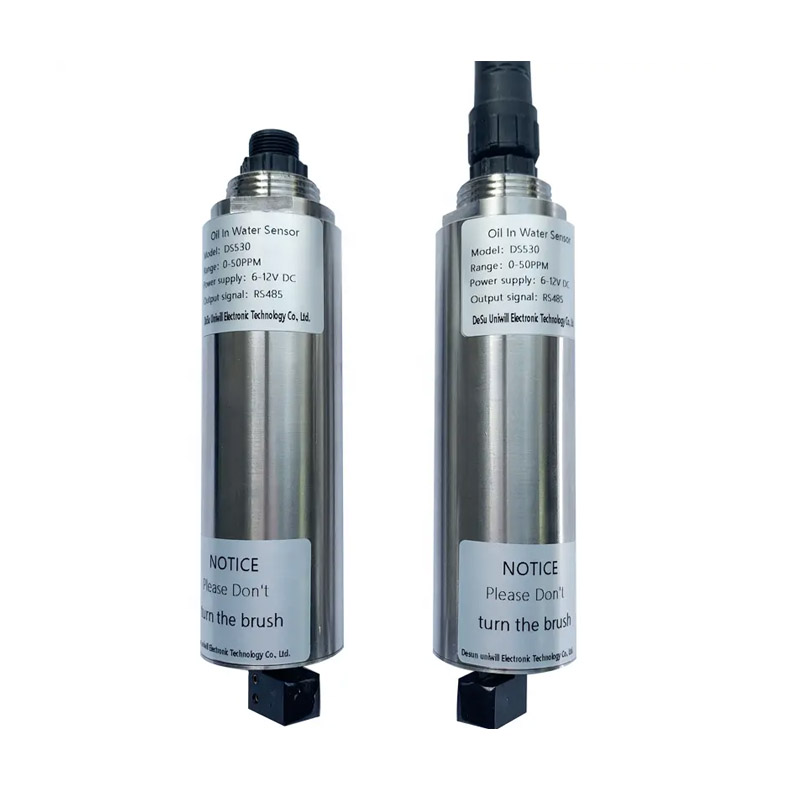
OPS online oil in water sensor uses the principle of fluorescence. Comparé à plusieurs méthodes couramment utilisées, the fluorescence method is more efficient and quicker, and can be monitored in real time. Le capteur a une meilleure répétabilité et stabilité.
-Capacitance Sensors: Capacitance sensors measure changes in the dielectric constant of the water as oil is introduced. They are versatile and can handle a wide range of water qualities.
When choosing a sensor, consider the nature of your application, the type of water, and the expected oil concentrations.
2, Plage de mesure
The measuring range of an capteur d'huile dans l'eau refers to the range of oil concentrations it can detect accurately. Ensure that the sensor you choose covers the range of oil concentrations you need to monitor. Some sensors are more suitable for trace-level detection, while others excel in high concentration environments. The Measuring Range of OPS online oil in water sensor is 0-50ppm.
3, Étalonnage et maintenance
Regular calibration and maintenance are essential to ensure accurate and reliable readings. Look for sensors that are easy to calibrate and maintain, and consider the cost and frequency of these activities.
4, Conditions environnementales
Consider the environmental conditions in which the sensor will be deployed. Factors like temperature, pression, and exposure to corrosive substances can affect the sensor’s performance. Ensure that the sensor you choose is designed to withstand these conditions.
5, Certification and Compliance
In many industries, oil in water sensors must meet specific certification and compliance standards. Be sure to select a sensor that meets the necessary regulatory requirements and standards relevant to your industry.
6, Data Output and Connectivity
Modern capteurs d'huile dans l'eau often come with digital data output capabilities, making it easier to integrate them into your monitoring systems. Consider the data output format and connectivity options, such as analog, numérique, or Modbus, to ensure compatibility with your existing infrastructure.
7, Sample Handling
Some sensors require sample preparation or filtration before analysis, while others can work directly with unprocessed samples. Consider the ease of sample handling and whether it fits your workflow.
8, Size and Mounting Options
The physical size and mounting options of the sensor are important, especially when space is limited or when retrofitting existing systems. Ensure that the sensor can be easily integrated into your setup.
En conclusion, Selecting the right oil in water sensors are crucial for accurate and reliable monitoring of hydrocarbon concentrations in water. Consider factors such as sensor technology, measuring range, étalonnage, conditions environnementales, certification, data output, sample handling, and size when making your decision. By thoroughly evaluating these aspects, vous pouvez vous assurer que le capteur que vous avez choisi répond à vos besoins spécifiques et aux exigences réglementaires, contribuant finalement au succès de vos applications et de vos efforts de protection de l'environnement.
Si vous avez des questions lors du choix d'un capteur d'huile dans l'eau, vous pouvez contacter OPS à tout moment. Nous vous recommanderons le capteur le plus adapté en fonction de vos besoins d'utilisation.
Mots clés: capteur d'huile dans l'eau, capteur d'huile dans l'eau pour le traitement des eaux usées, capteur d'huile dans l'eau pour la surveillance de l'environnement, mesurer la présence d'hydrocarbures, measuring the presence of oil in water, Fournisseurs, fabricants, usine, de gros, acheter, prix, citation, en gros, à vendre, entreprises, action, coût.
Produit associé:
Capteur d'huile dans l'eau
Actualités connexes:
Un guide complet d’installation et d’étalonnage du capteur d’huile dans l’eau
Fonctionnement des capteurs d’huile dans l’eau et conseils de fonctionnement?
Comment choisir le capteur d'huile dans l'eau parfait pour vos applications ?
Domaines d'application courants de l'huile Desun dans les capteurs d'eau
10 les capteurs et contrôleurs d'huile dans l'eau seront envoyés en Russie
Vidéo connexe:
Pour envoyer une demande maintenant: